Look for a specific record
Ask for an invoice or written description rather than accepting serviced as a complete answer. The record should identify the clock sufficiently to connect it with the object for sale. A repairer's name and date help, but a vague receipt for a clock may leave questions if the owner had several.
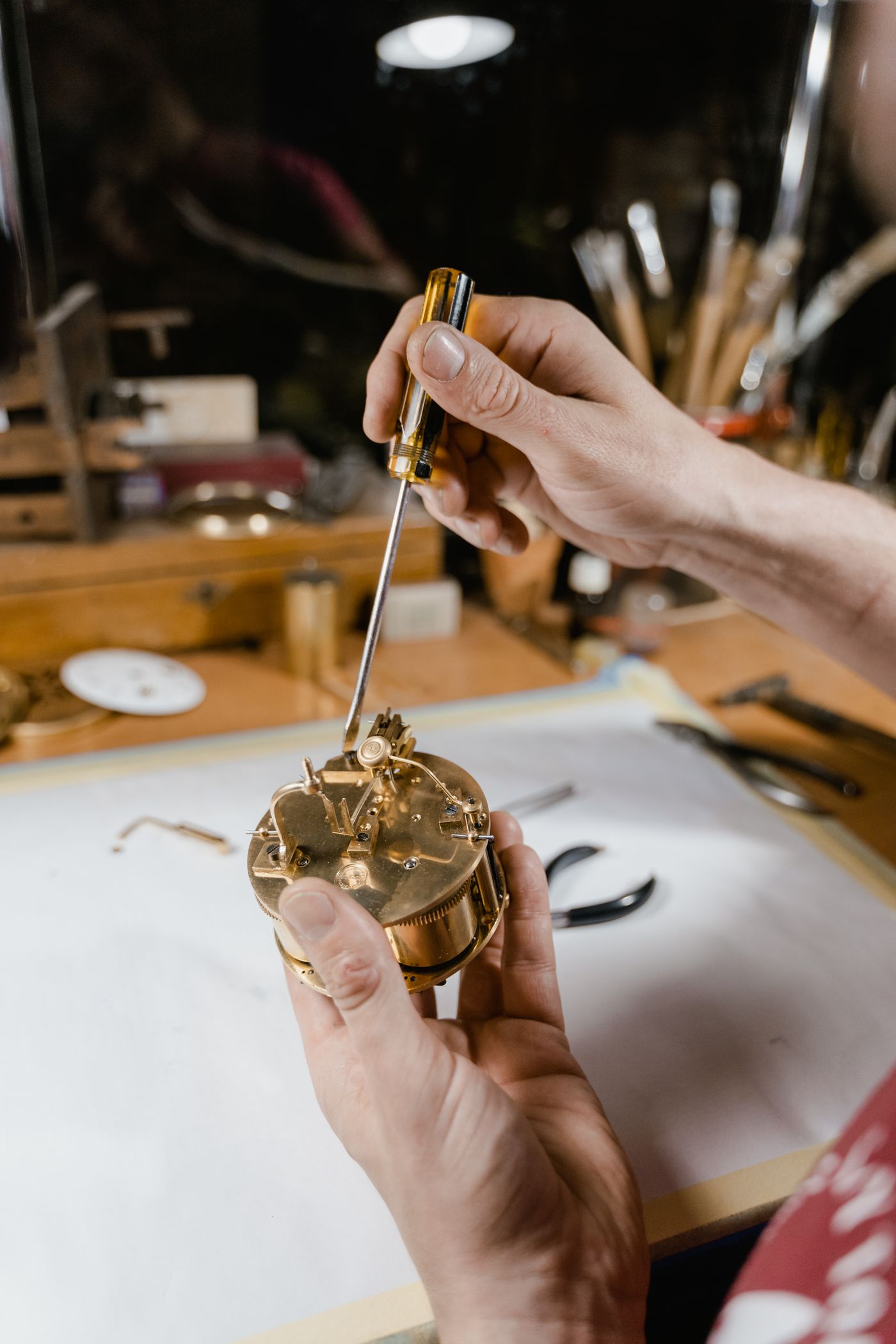
Check whether the work concerned the case, the movement or both. Polishing the case, replacing a glass and servicing a mechanism are separate jobs. A photograph of a clean movement is not a substitute for a description of the work carried out.
Read the limits as well
Look for notes about worn parts, replacements, remaining faults or recommendations declined at the time. Such details may be more valuable than a short assurance that the clock was running on collection. Ask whether the clock has been used regularly or stored since that service, without assuming either history guarantees its present condition.
There is no single service interval that settles every buying decision. Age, construction, use and condition all matter. If reliable operation is important, ask a suitable repairer to assess the particular clock rather than calculating certainty from the date on an old invoice.
Keep history connected
With permission, retain a copy of the service record and any relevant seller correspondence. Keep personal information only where necessary for the clock's record. Note which components were replaced and whether the originals survive, especially if originality affects your reason for buying.
Continue the record
After purchase, continue the same record with dates, observed behaviour and any further work. Do not add a maintenance claim simply because you dusted the case or changed its position. A clear distinction between owner observations and professional work makes the history useful to the next person who examines the mechanism.