On the workbench
Plan the fit before changing the parts.
20 guides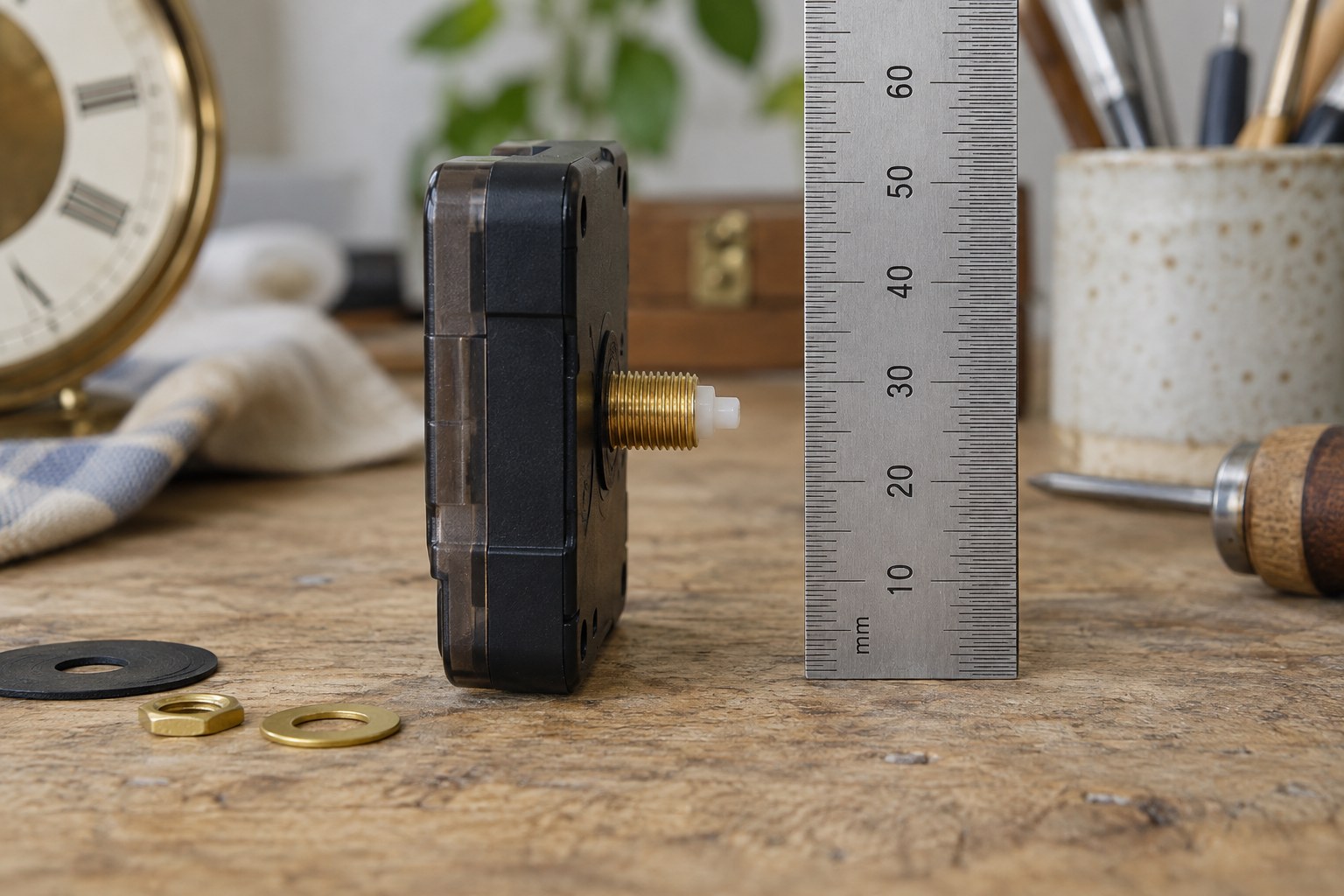
Measuring a quartz movement before replacement
Measure the fixing, the hand stack and the space behind the face before choosing a replacement.
Read the notes ↗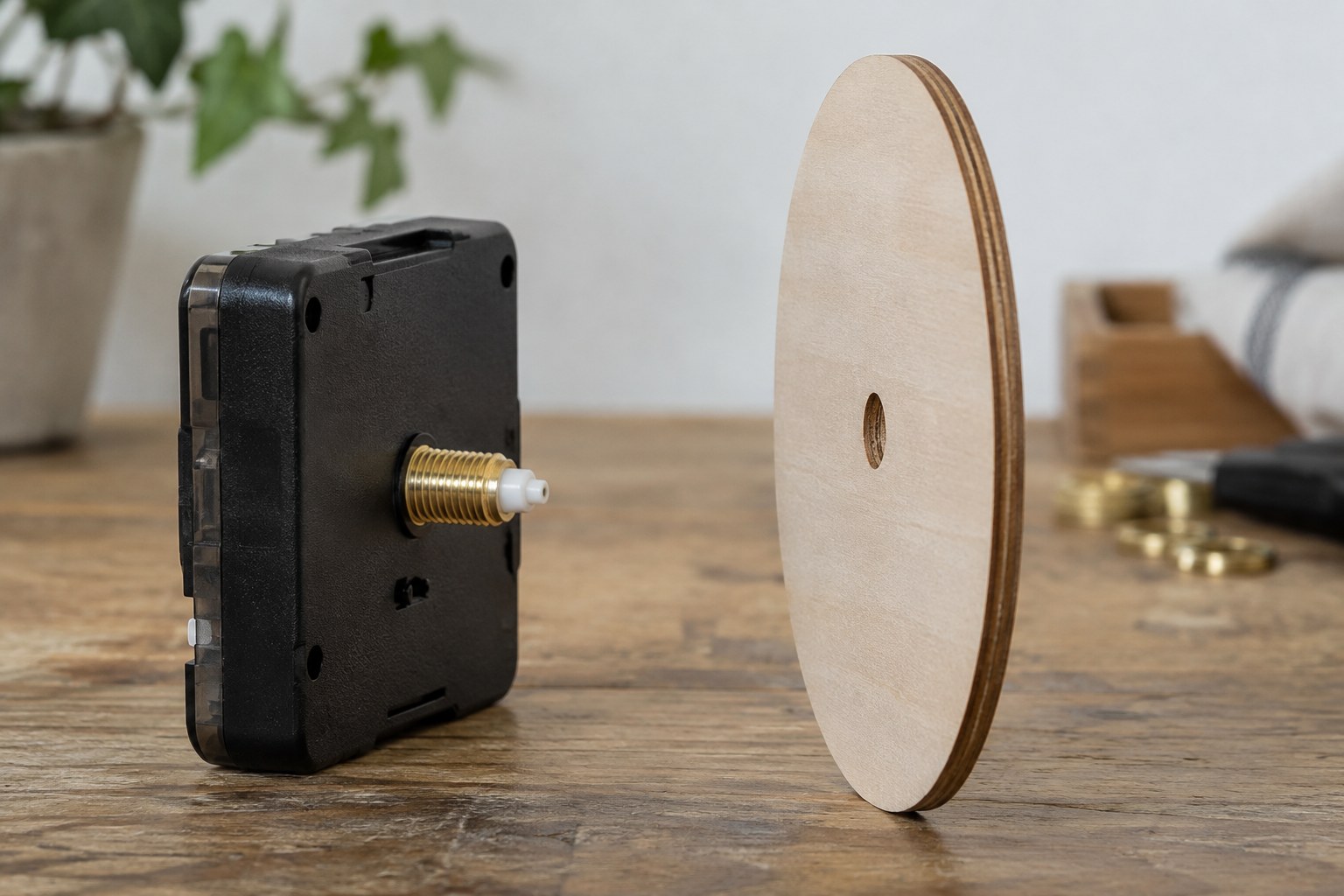
Threaded shaft length and dial thickness
The threaded section holds the movement in place; its length is not the same as the complete hand shaft.
Read the notes ↗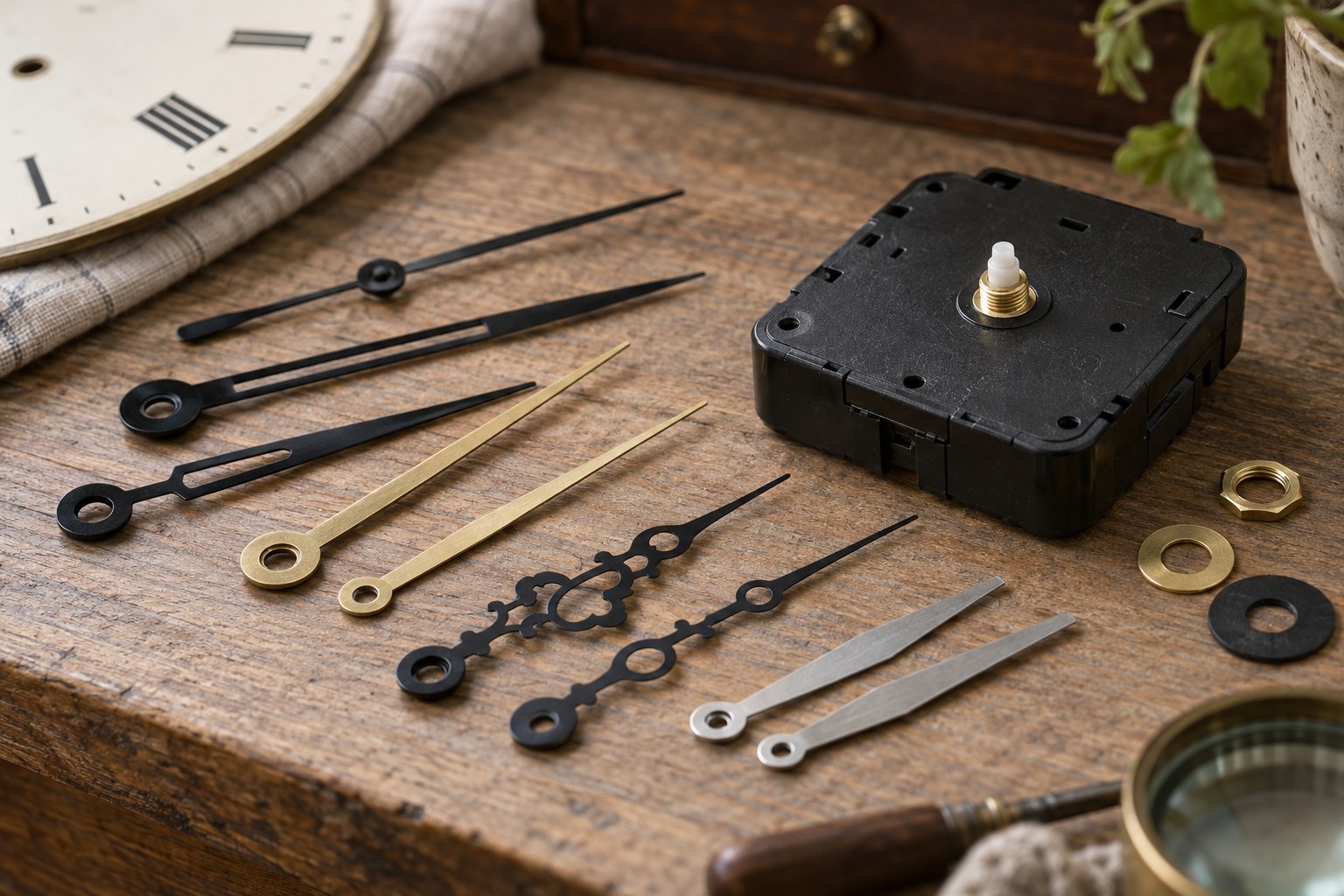
Matching replacement hands to the movement
Hand length affects appearance, but the small fitting at the centre decides compatibility.
Read the notes ↗
Checking hand clearance under a glass cover
A cover that closes successfully can still leave too little space for the hands to travel.
Read the notes ↗
Planning a dial change before taking anything apart
A successful dial update begins with a reversible plan for a modern craft clock.
Read the notes ↗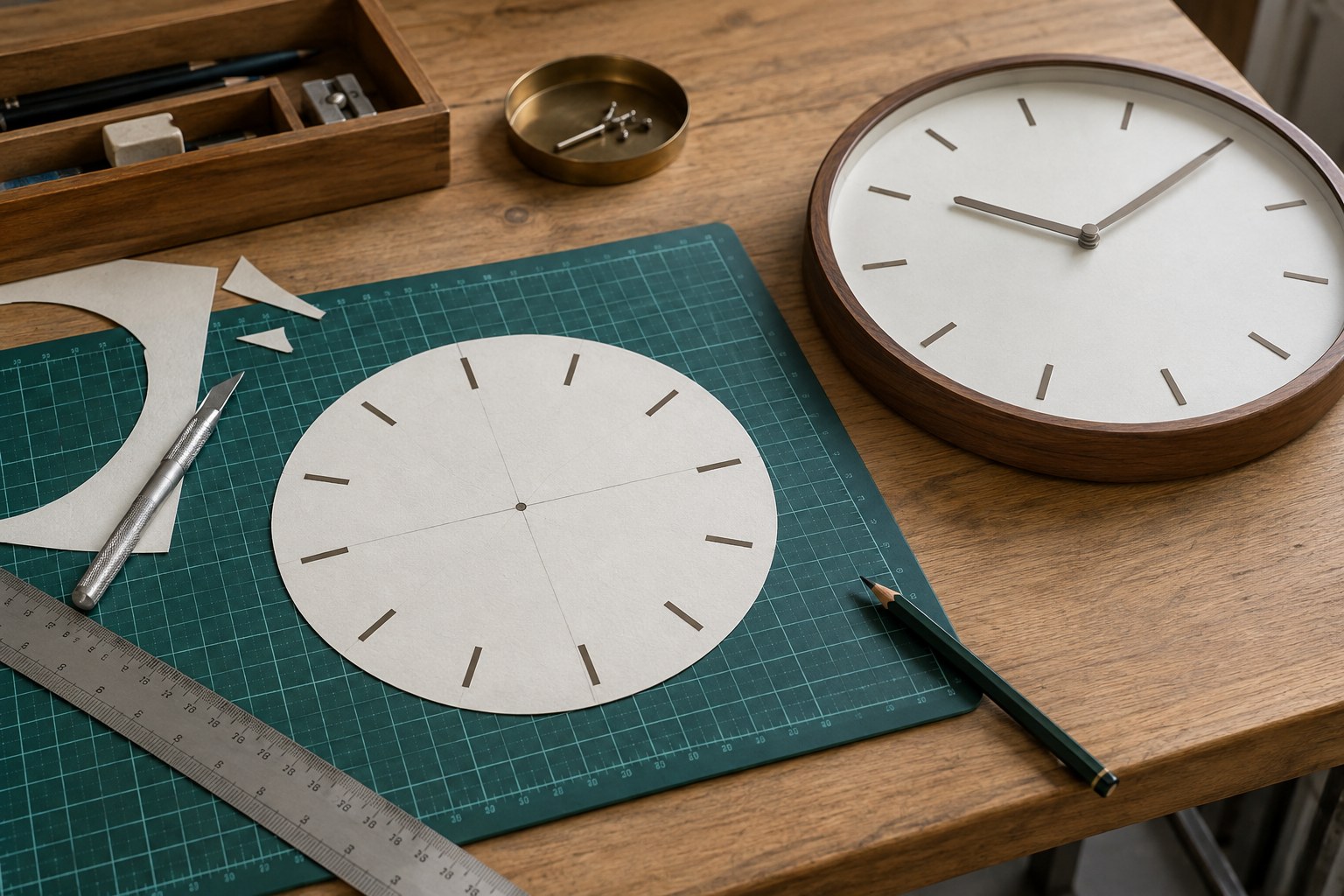
Making a paper mock-up for a new clock face
Paper is a useful way to test size, spacing and readability before committing to a new face.
Read the notes ↗
Choosing a high-contrast dial colour scheme
Make the hands and hour positions easy to separate before choosing decorative accents.
Read the notes ↗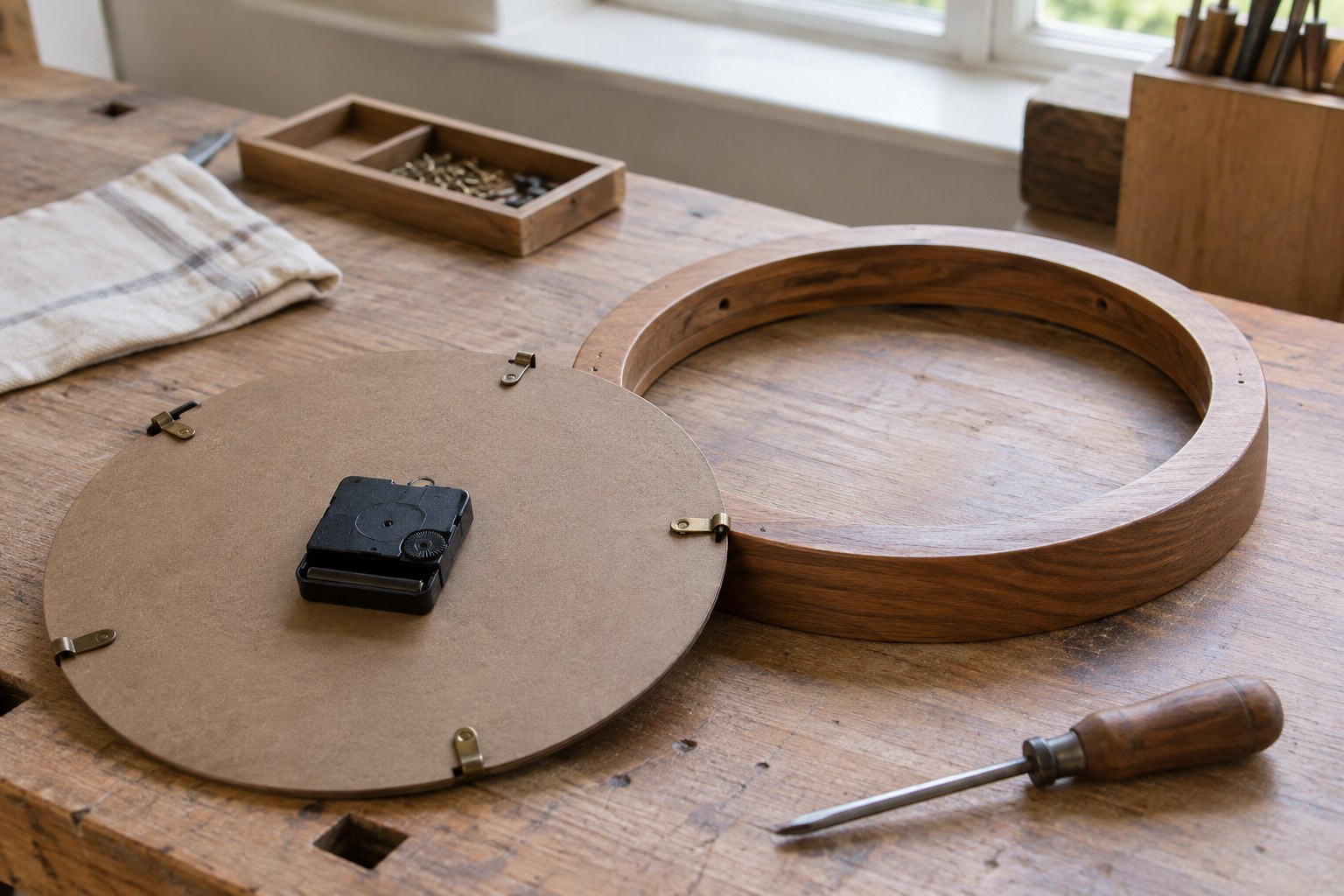
Preparing a removable backing for a clock project
Design the backing to come out cleanly while supporting the face and keeping the movement secure.
Read the notes ↗
Laying out twelve hour markers evenly
Use the centre of the dial as the reference, then check the layout by eye at full size.
Read the notes ↗