Start at the places you work
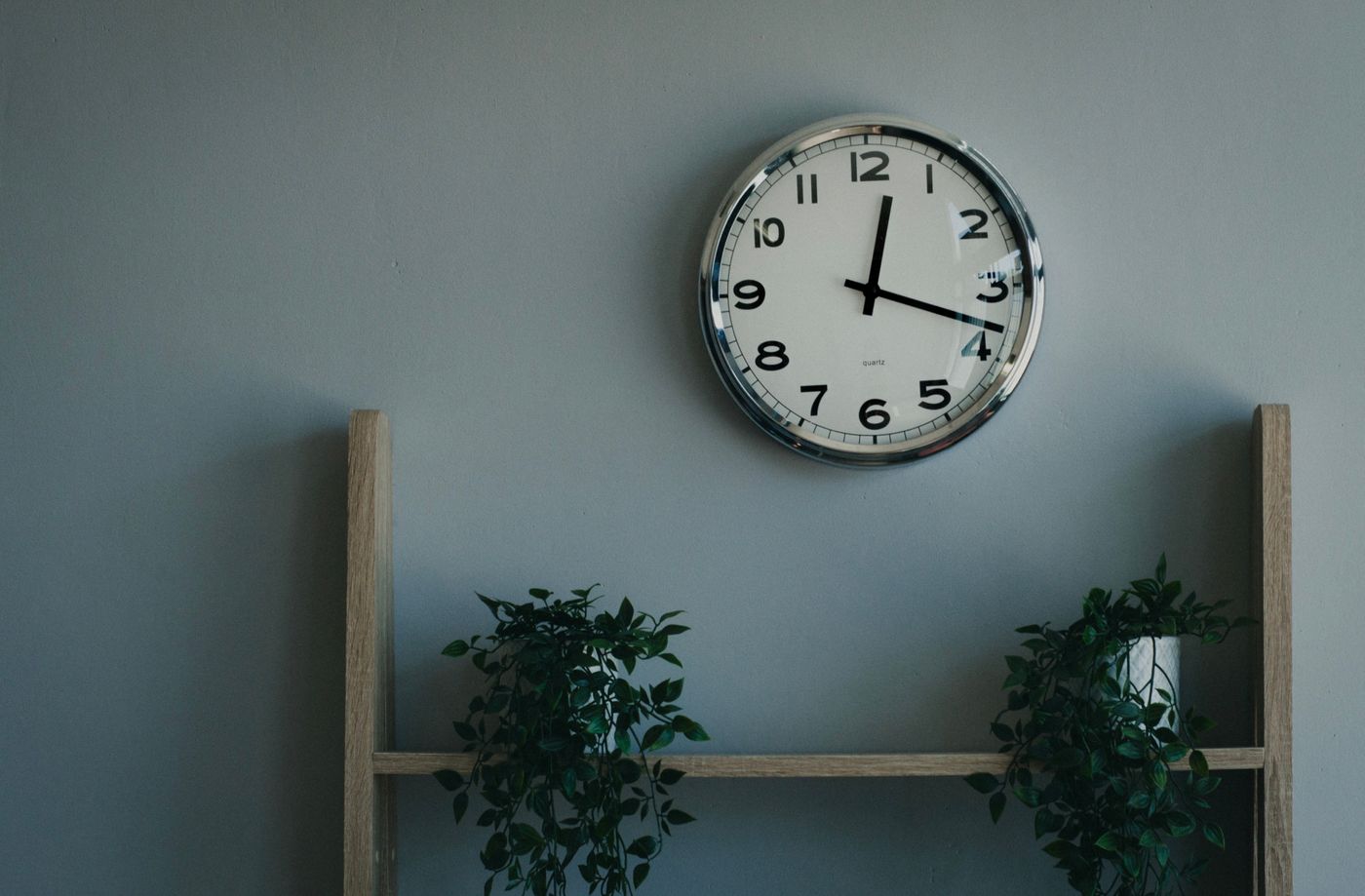
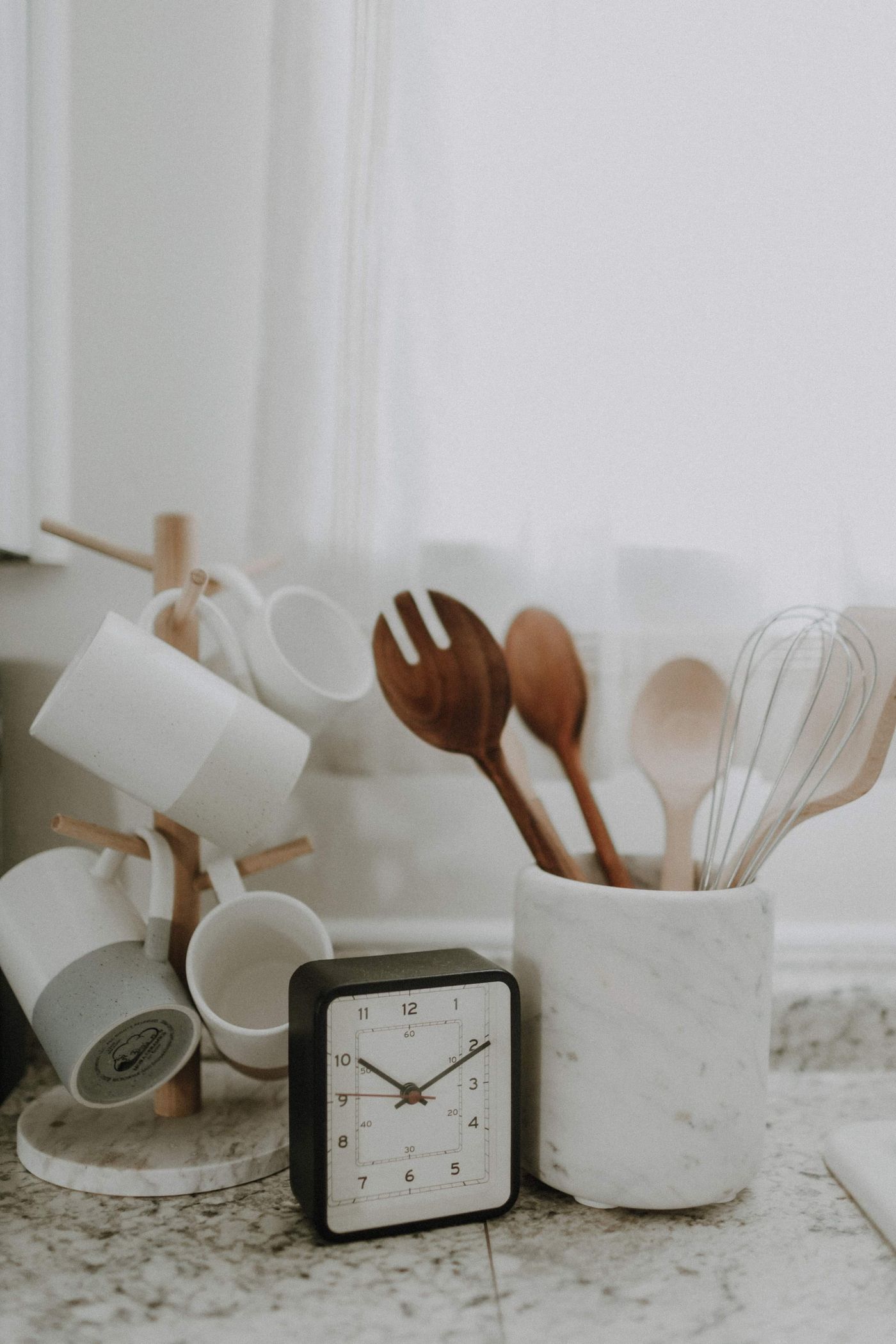
Stand at the main preparation area and then by the table or breakfast bar. Check which wall can be seen without turning awkwardly or opening a cupboard door. The clock should remain readable when someone else is moving around the kitchen. A large decorative frame may suit an empty wall but leave surprisingly little space for the dial. Compare the usable face size, hand contrast and depth of the rim. Keep a separate kitchen timer for jobs that require an alert; being able to see the current time is a different function.
Choose a sensible environment
Avoid placing the clock directly above the hob, kettle or another source of steam and grease. A closed front can make the exterior easier to look after, but it does not make the whole clock washable. Check the manufacturer's cleaning and placement instructions rather than assuming a glass cover seals the mechanism. Consider sunlight too: a position that looks clear in the morning may reflect a bright window later. If the kitchen changes temperature considerably, choose a model specified for that environment instead of treating all indoor clocks as interchangeable.
Plan ordinary maintenance
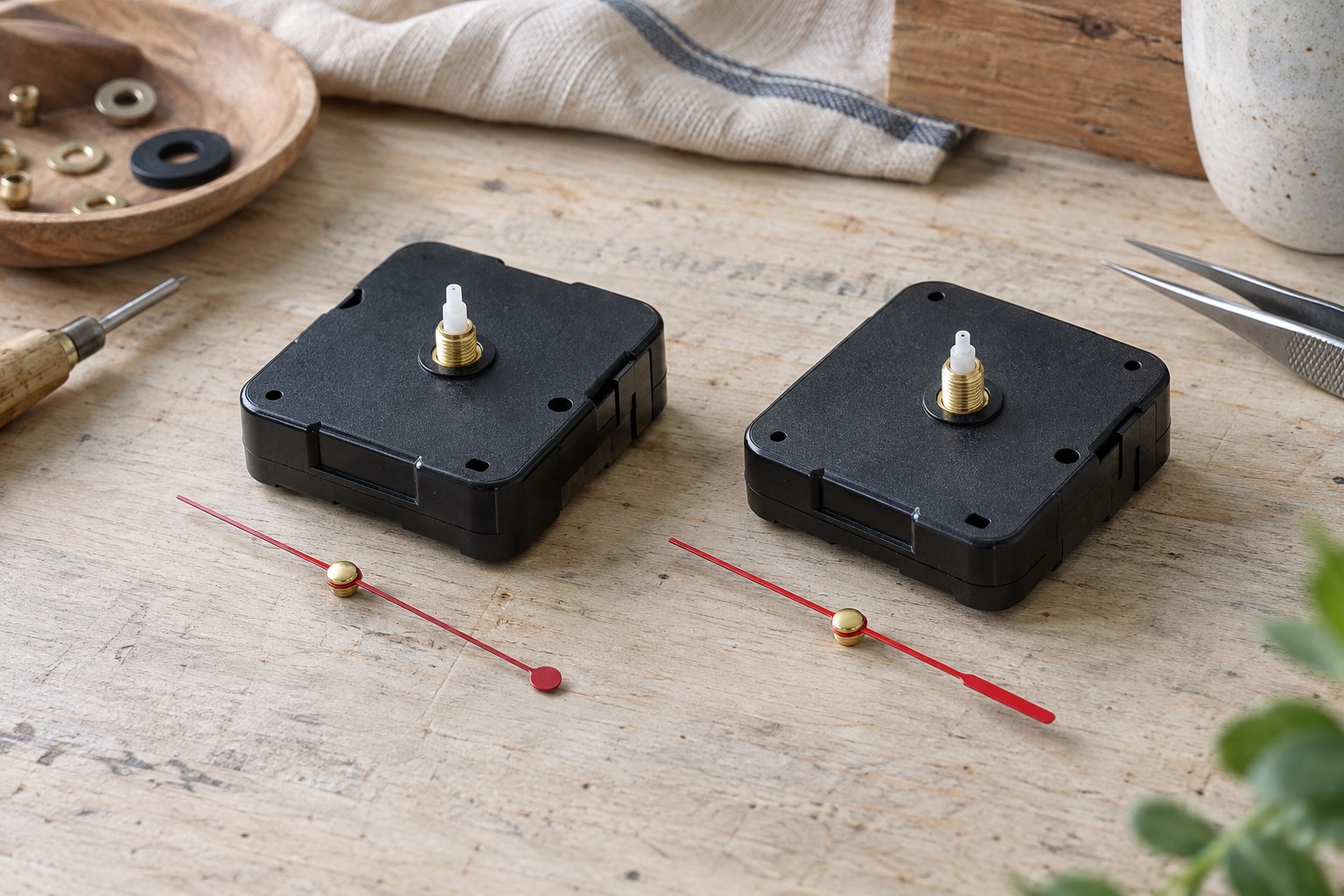
You should be able to take the clock down without reaching over hot equipment or standing on a worktop. Check the weight and hanging arrangement, then choose a suitable fixing for the actual wall. Read how the battery compartment opens and whether the clock has settings that will need restoring after a change. For cleaning, a simple stable case with few deep grooves may be more convenient than an intricate open design. Keep the instructions with the model number so you can check what is permitted when the first greasy mark appears.