Make a comparison sheet
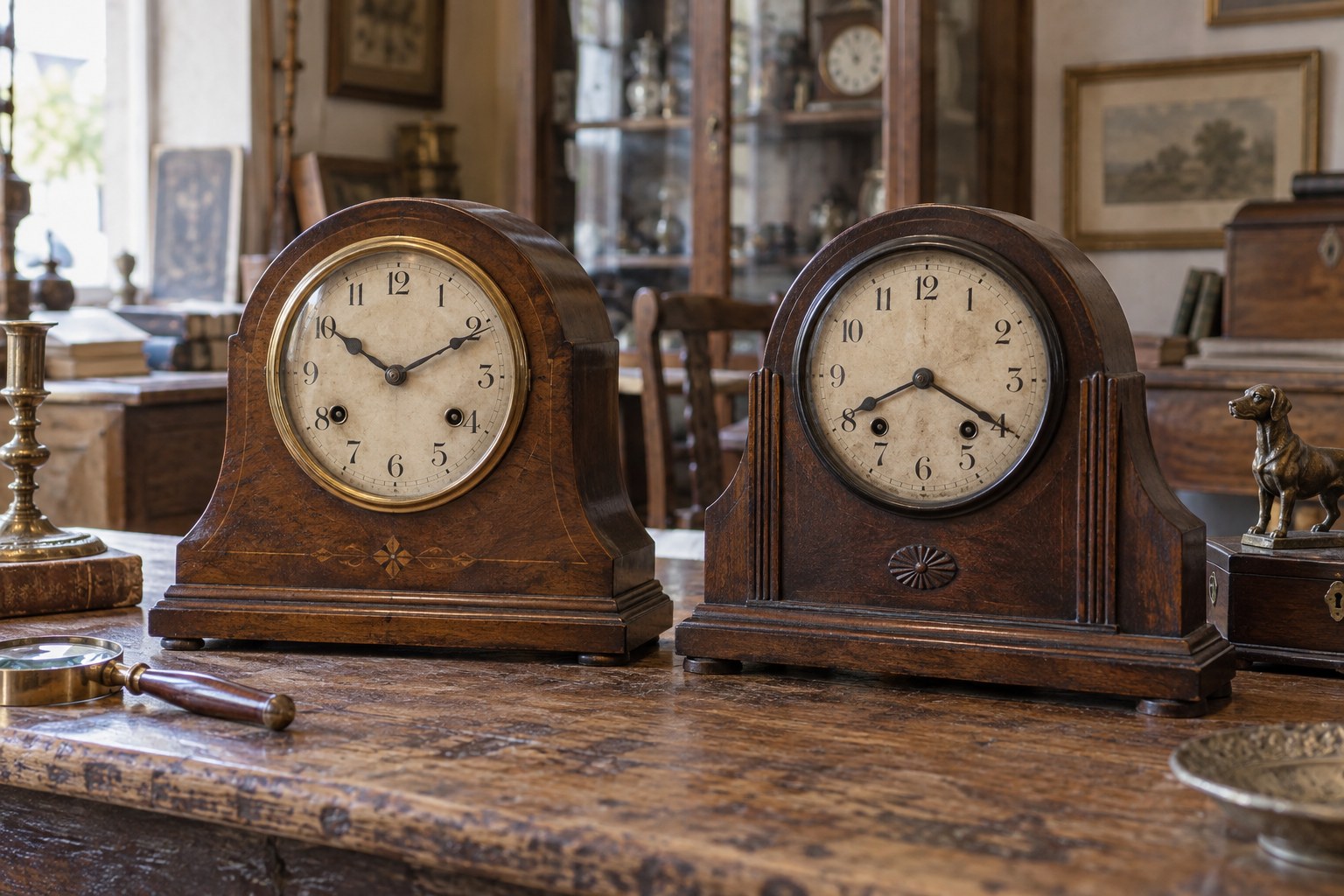
Put the two listings or inspection notes side by side and record dimensions, materials, visible marks and included accessories. Check whether measurements refer to the dial or complete case. A slightly different scale can make two similar designs feel quite different on the same shelf.
Ask for equivalent photographs: front, sides, rear and accessible base. Comparing a well-lit front view with a distant picture of the other clock invites assumptions. Do not request dismantling from an untrained seller simply to make the image sets identical.
Look for changes over time
Note disclosed replacement hands, dials, movements and repairs. A uniform finish may reflect restoration, while visible wear may be original or later damage; appearance alone does not settle the history. Keep the seller's claims separate from observations you can actually support.
Compare service evidence in the same way. One clock may have a detailed account of work and the other only a short video of it ticking. That difference is useful information even if both are described as working. Ask what functions were checked and for how long, especially if an alarm or striking mechanism matters to you.
Choose for your intended use
Decide whether your priority is display, regular operation, a particular design feature or documented history. A clock with more original material may suit one purpose, while a clearly disclosed replacement movement may suit another. There is no need to force every comparison into a single ranking of better condition.
Include transport arrangements, stability and likely assessment needs before choosing. Write a short reason for your preference using facts rather than the enthusiasm of the listing. If an unanswered question could change that preference, resolve it before purchase or accept explicitly that you are buying with that uncertainty.