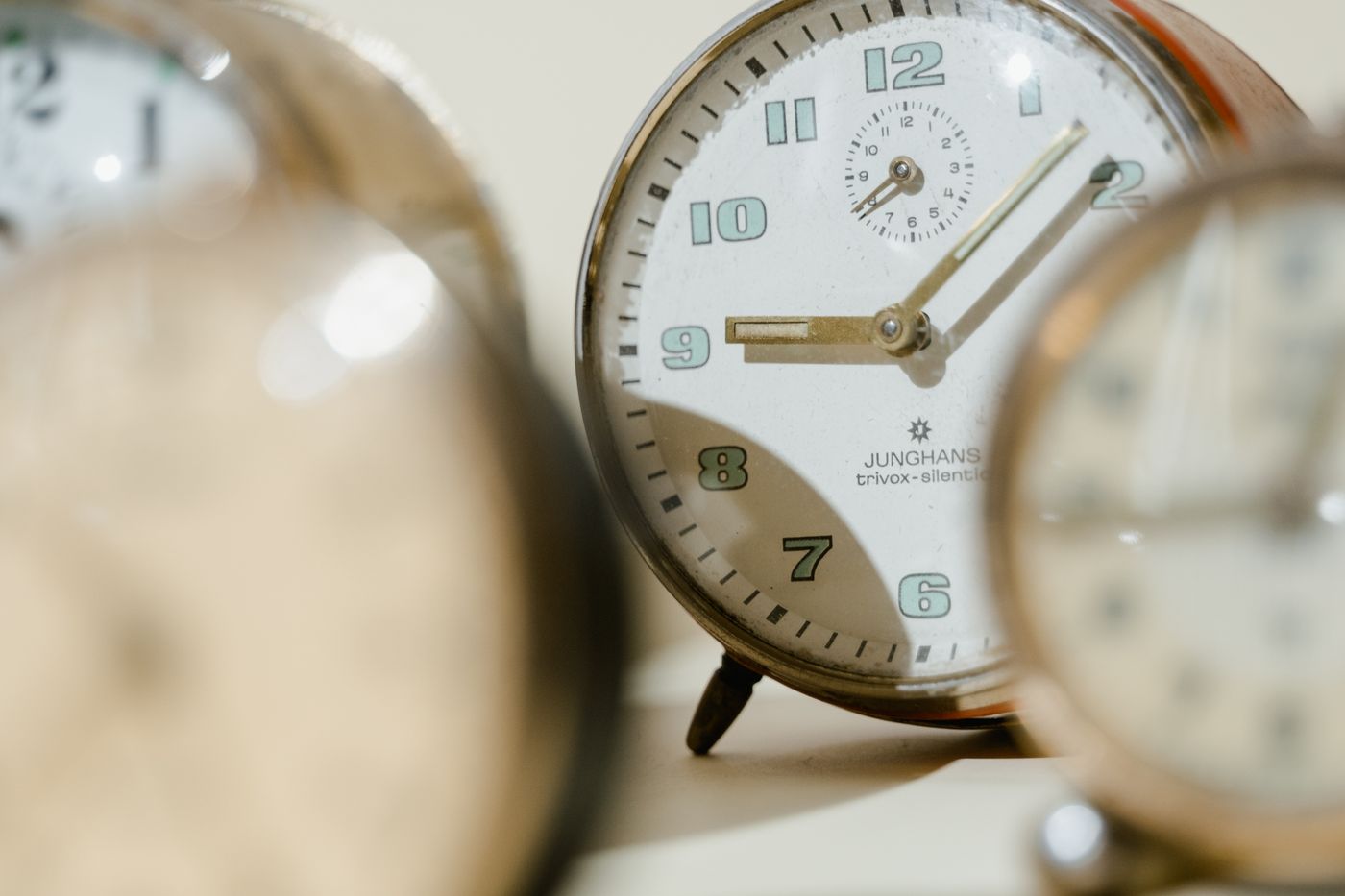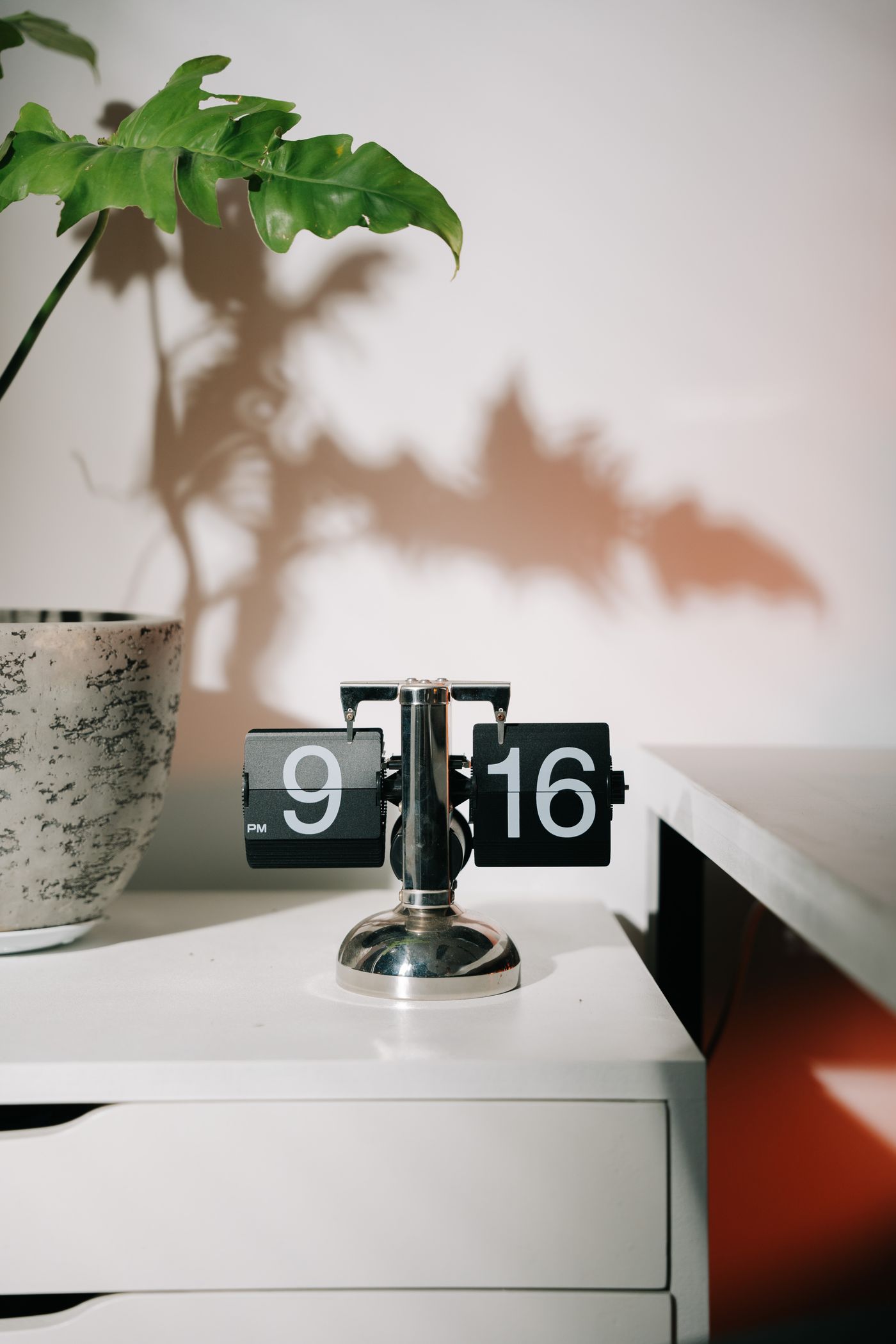
Identify the power arrangement
Confirm the exact model and whether it uses batteries, mains power or another specified supply. Ask for photographs of the rating information and rear controls. Do not assume a familiar brand name means a vintage example has the same electrical requirements as a current product.
An old mains-powered clock should be assessed appropriately before a trial connection. A plug adaptor alone does not establish compatibility or safety. If the supply details are missing or unclear, leave operation unresolved until a suitably qualified person can advise.
Watch the display change
For a safely operable example, request a video showing an actual change of the minute display rather than only a still image. Look for incomplete flips, misaligned leaves and numerals which are obscured or missing. A short recording cannot establish long-term reliability, but it can reveal a specific question to ask.
Check the housing and viewing window for cracks and the controls for missing knobs. Do not reach inside to persuade a stuck leaf to fall or lubricate the display. The mechanism is not an ordinary paper calendar, and manual interference can create damage that was absent before the test.
Ask about functions and history
Establish which functions have been checked: time display, alarm, illumination and any date indication may need separate answers. Request service details if work is claimed, including whether parts were replaced. Keep the difference between tested, untested and faulty clear in the purchase record.
Check the position at home
Measure the complete case and consider its reading angle at home. Some displays are easiest to see straight on and become less clear from above or beside a desk. Include likely assessment, transport and repair uncertainty in the decision, rather than buying solely for the satisfying appearance of one successful flip.