Measure the complete outline
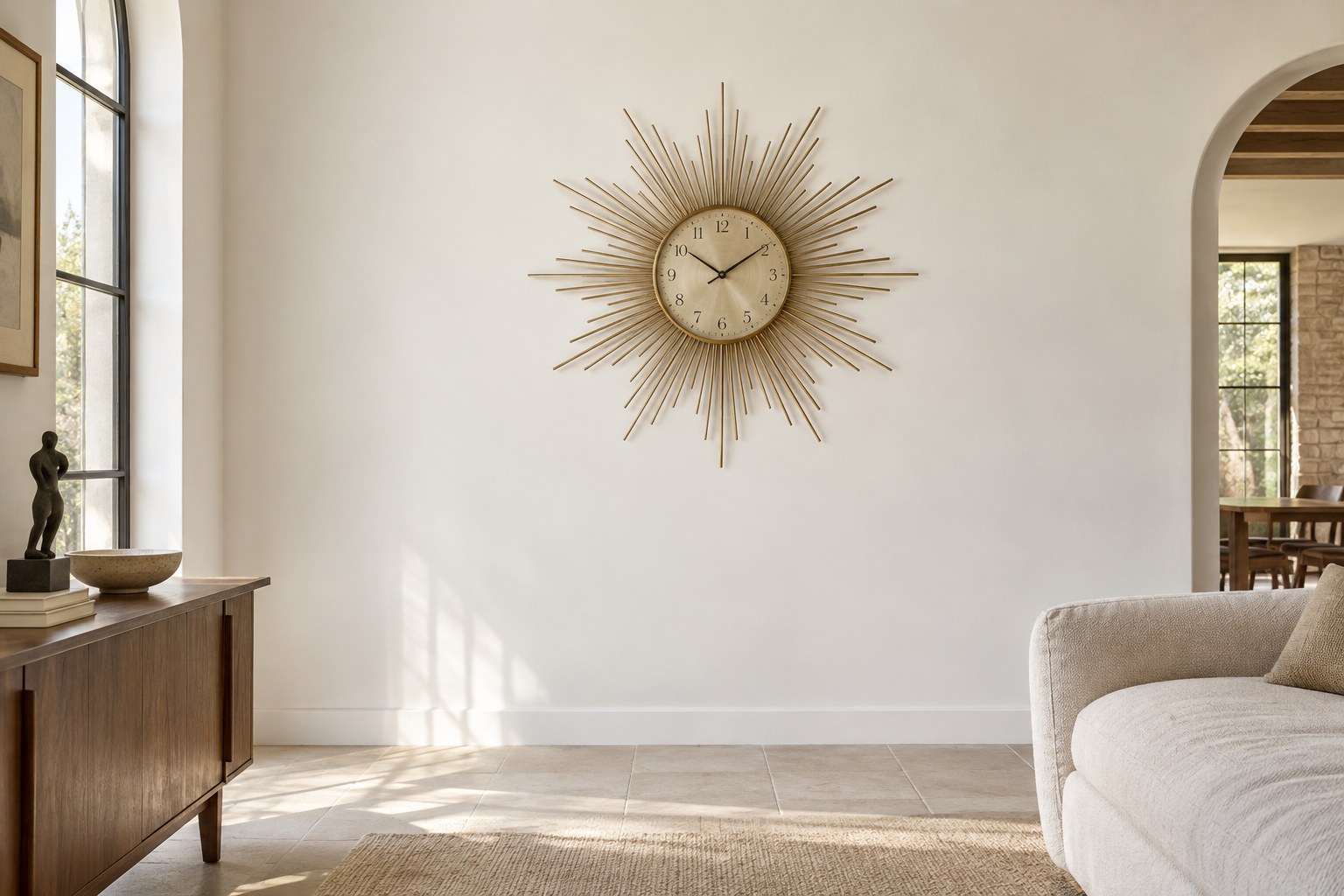
Ask for the maximum width and height from the furthest projecting points, not just the centre dial diameter. Some sunburst designs are uneven or have rays of different lengths. A full-size paper outline makes those projections easier to judge against a shelf, doorway or adjacent picture. Leave practical space for taking the clock down safely. Rays close to a ceiling or cupboard can be difficult to support during handling. The display should allow hands to reach the sound central case without pulling on the decorative extensions.
Inspect the attachments
On a vintage example, request close views of the ray attachments and any disclosed repairs. Look for bent pieces, loose joints or missing elements, while recognising that a photograph cannot prove structural soundness. Do not straighten a ray by trial; its material and connection may be more fragile than they appear.
Check the rear hanging arrangement and the complete weight. A dramatic outline can disguise a small central fixing, but its suitability still needs assessment. Use an appropriate wall fixing and obtain help where the condition or construction makes secure installation uncertain.
Give the shape a clear background
Try the paper silhouette against the intended wall at different times of day. Strong wallpaper or a group of small pictures can make the rays difficult to distinguish. A quieter surrounding area often lets the shape read without needing to place the clock uncomfortably high.
Remember the practical dial within the decoration. View it from the normal seat or doorway and check whether the hands remain clear. Keep the clock away from routes where a door, curtain or raised object might catch a projecting ray, and avoid positions directly above strong heat sources which can affect mixed materials and finishes.