Count what the shaft crosses
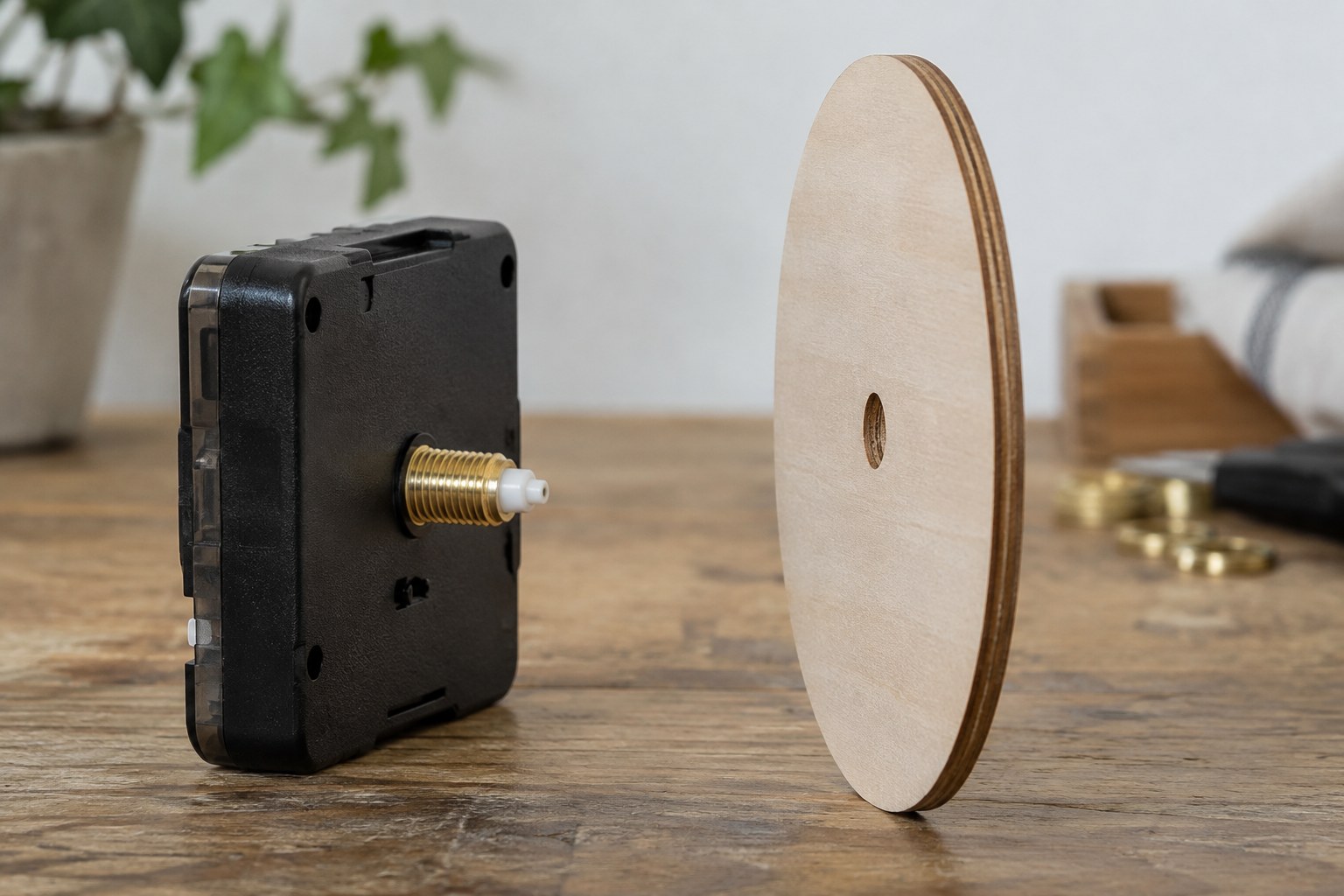
Imagine a cut through the centre of a simple craft clock. The shaft may pass through a decorative face, a backing sheet and a washer arrangement before reaching its fixing nut. The visible dial alone does not describe that stack. Record each layer and distinguish a permanent part from packing that belongs to the original movement. For an existing modern battery clock, remove the battery and consult its assembly instructions before measuring inaccessible parts. Do not prise up an old dial or pull an unknown hand fitting merely to obtain a dimension. A photograph and repair enquiry are better next steps if access is uncertain.
Read the drawing literally
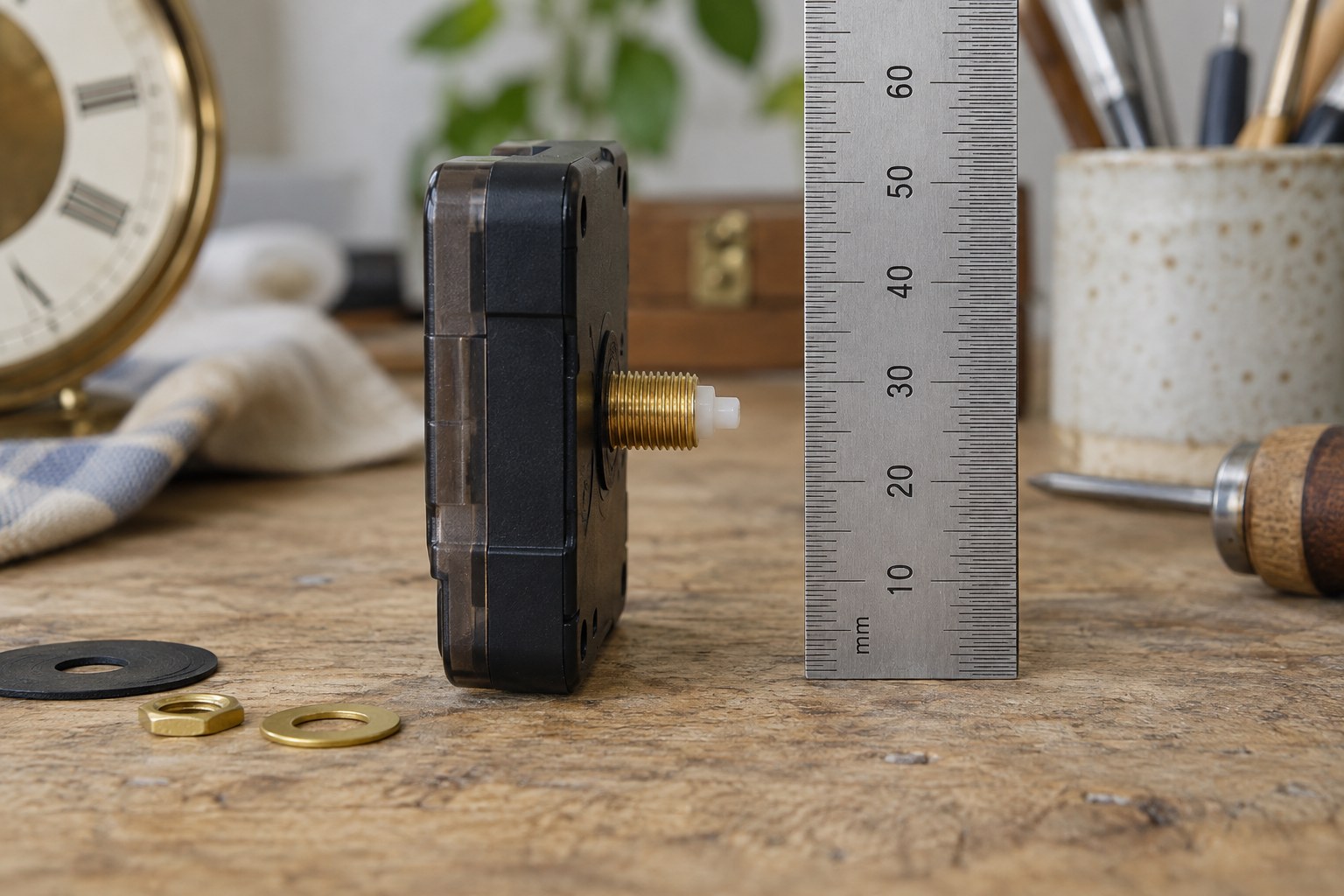
Suppliers may advertise overall shaft length, threaded length or maximum dial thickness. Those terms describe different things. Find the dimensioned drawing and identify the manufacturer's reference surfaces. A number measured to the very tip cannot be compared directly with the portion that accepts a fixing nut.
The nut must engage as specified without being used to crush the face into position. There is no single spare-thread allowance suitable for all movements and hardware. Likewise, a much longer shaft is not automatically preferable: it can move the hand stack too close to the cover or create an awkward visible gap.
Resolve the fit before purchase
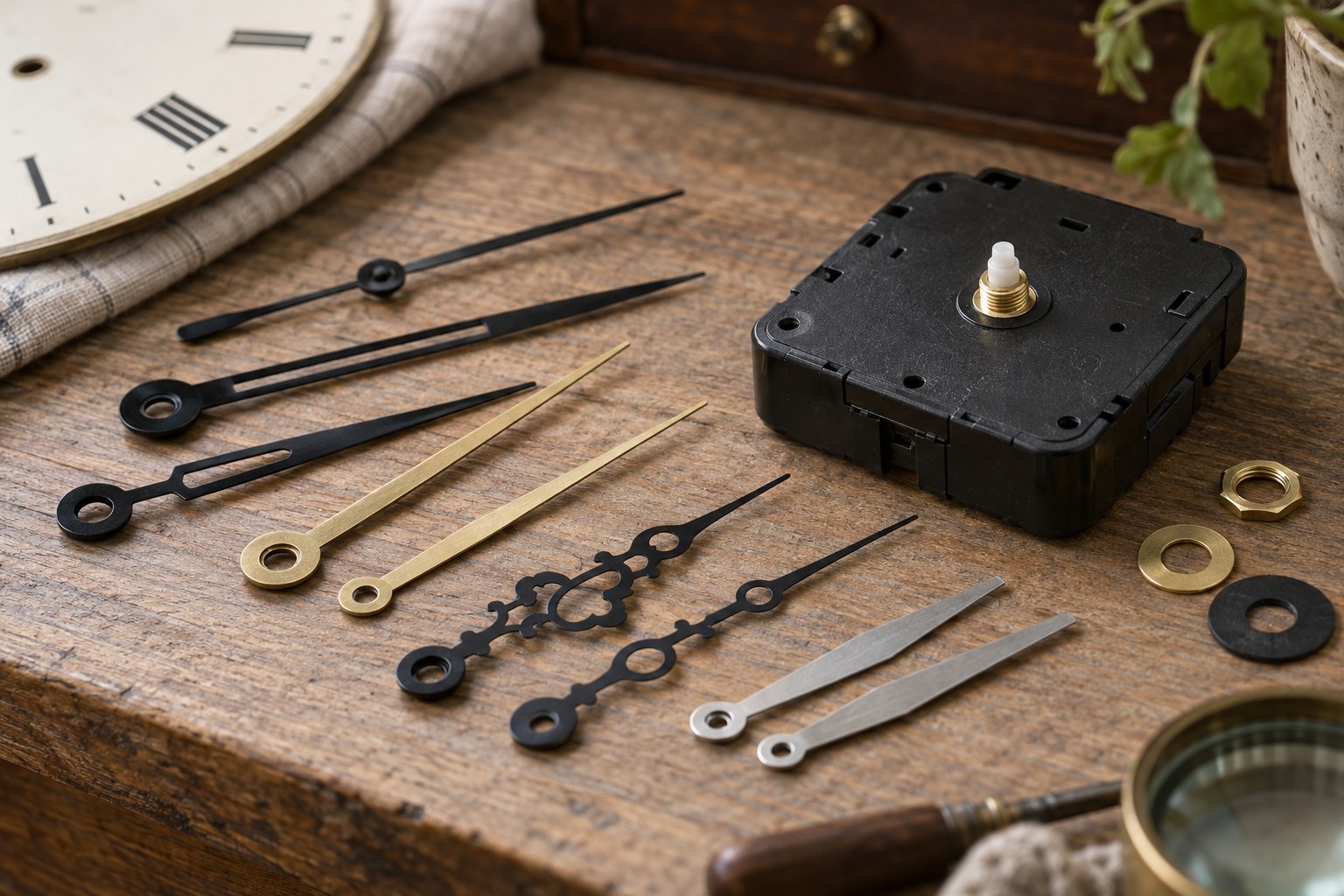
Send the supplier your full material thickness, the proposed hand set and a photograph of the cover arrangement. Ask which of its movement variants is intended for that combination. Include the space behind the dial if the body sits in a recess rather than on an open board.
When the parts arrive, compare the instructions and drawing with what was supplied before assembly. Do not shorten the shaft or add an improvised tower of washers to rescue a mismatch. Exchanging an unused component is usually a cleaner solution than altering a part whose fit you have not established.