Ask which signal it receives
Radio-controlled is a broad description. For UK automatic time setting, ask whether the exact model receives the MSF signal, rather than assuming every radio clock supports it. The National Physical Laboratory describes MSF as a time broadcast from Anthorn, not an internet connection. A model intended for another market may use a different signal. Check the model number on the listing against the instructions, especially when one product page offers several regional versions. A familiar brand name does not resolve that distinction.
Ask how it behaves between updates
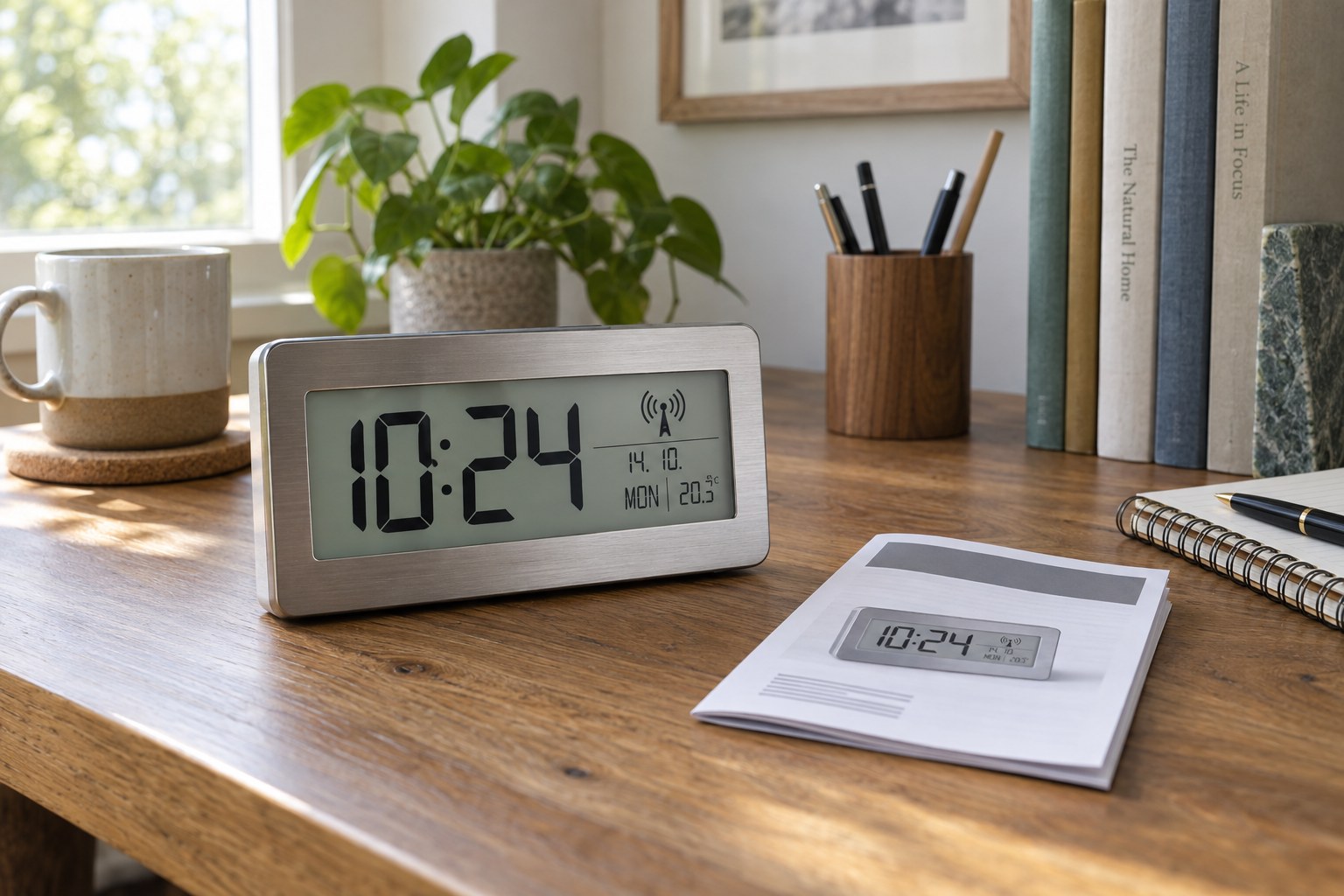
Find out how the clock indicates successful reception and what it does while waiting for a signal. Ask whether manual setting is available and how the clock handles the UK seasonal time change. The manual should explain these features for the particular model. Avoid treating radio control as a promise that the display can never be wrong. A clock still needs the correct setup, a suitable power supply and an opportunity to receive updates. Keep the instructions for any reset procedure rather than experimenting with combinations of unlabelled buttons.
Think about your building
Reception can be affected by local interference and screening from metalwork. Before buying, consider whether the clock must occupy one fixed position or could be moved temporarily for setup. NPL's guidance suggests checking the manual and allowing time for reception; repeated rapid resets are not a useful test. Ask about return arrangements if reception in the intended room is essential. After delivery, compare the indicated reception status with a reliable time reference and observe normal operation before relying on the clock for a critical appointment. Check official outage information if an established clock suddenly struggles to synchronise.