Identify the fabric and construction
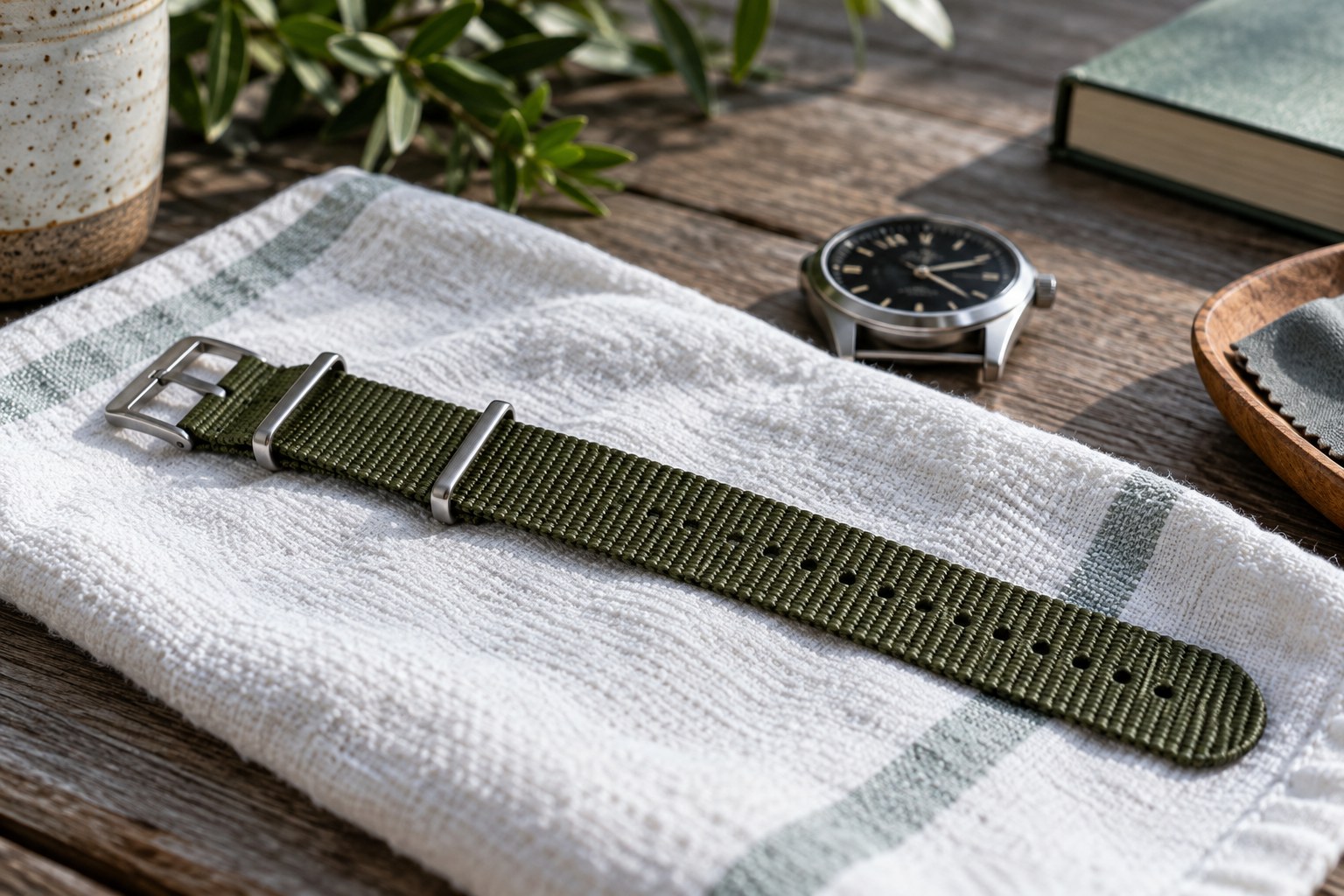
Fabric is a broad description. A woven strap may include leather reinforcement, glued layers or metal fittings with their own care requirements. Check the strap maker's instructions before washing it. The method for a simple nylon strap should not automatically be applied to a mixed-material one.
Separate the care of the strap from the water resistance of the watch. If the strap needs cleaning, do not immerse the assembled watch simply because the strap can tolerate water. Where removal is appropriate, have it done securely using the correct method, or ask a repairer if the attachment is unfamiliar.
Allow air to reach the whole strap
After any permitted cleaning, remove excess moisture as directed and arrange the strap where air can reach both sides. Keep it out of strong heat and direct sunlight. Do not accelerate drying with a hairdryer, radiator or hot dashboard unless the manufacturer specifically instructs a method that involves heat.
Pay attention to folded sections, thick seams and the area under keepers. They may remain damp after the broad flat sections feel dry. There is no useful universal drying time: construction, room conditions and how wet the strap became all make a difference.
Check before wearing or storing
Feel the less exposed areas and allow more time if they remain cool or damp. Refit only when the strap is ready according to its care instructions. Check that the attachment is secure and that the material has not become distorted around the fittings.
Avoid putting a damp strap into a closed watch roll or drawer. If odour, fraying or stiffness remains after appropriate care, consider replacing it rather than repeating increasingly aggressive cleaning. A spare suitable strap can be convenient when one is drying, but each replacement still needs the correct dimensions and attachment.