Look beyond the mounting hole
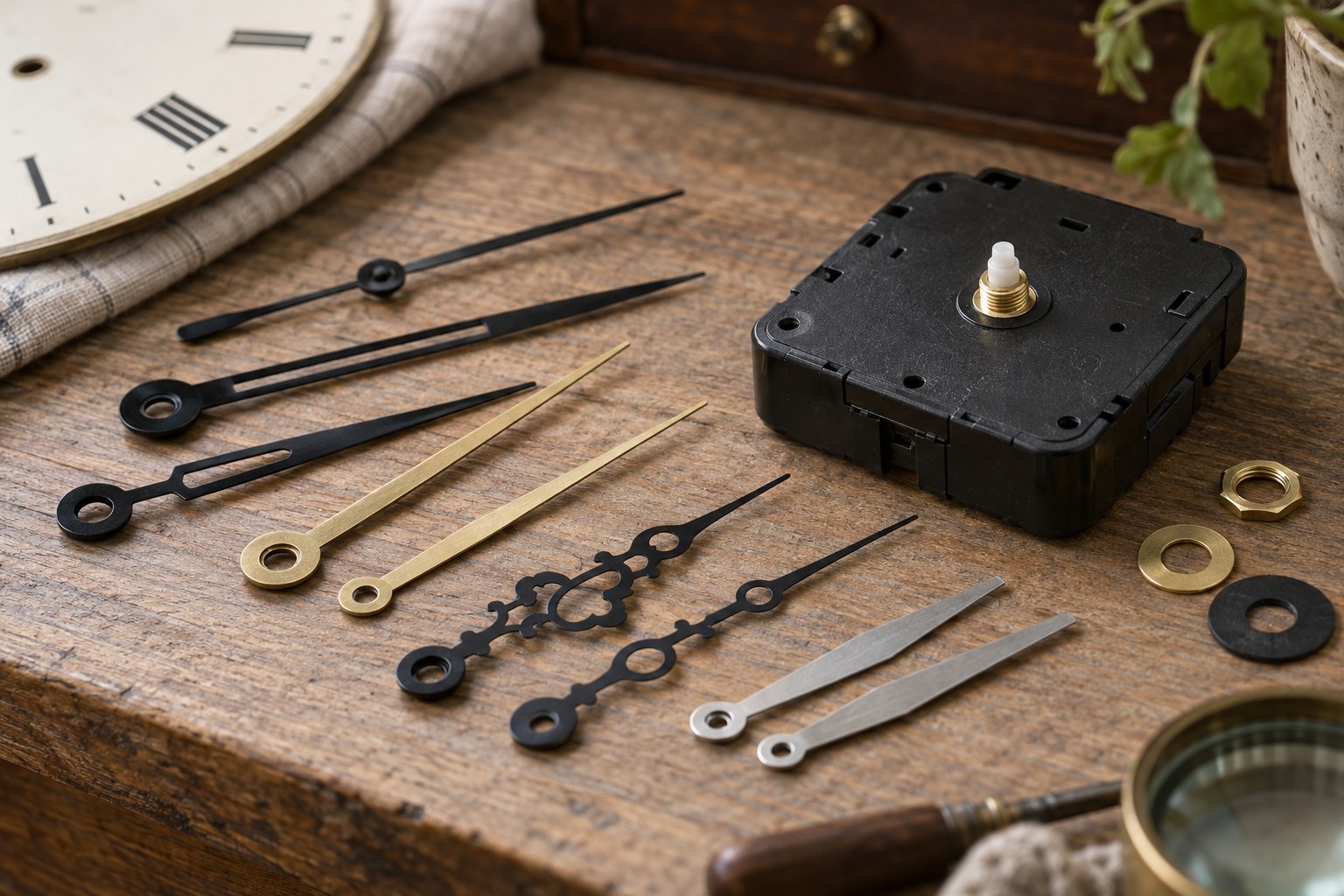
A large hand can share a fitting shape with a smaller one without being suitable for the same movement. Read the supplier's stated hand limits and identify whether those limits refer to length, mass or a particular matching set. There is no useful universal rule that every hand above one length works with every product labelled high torque.
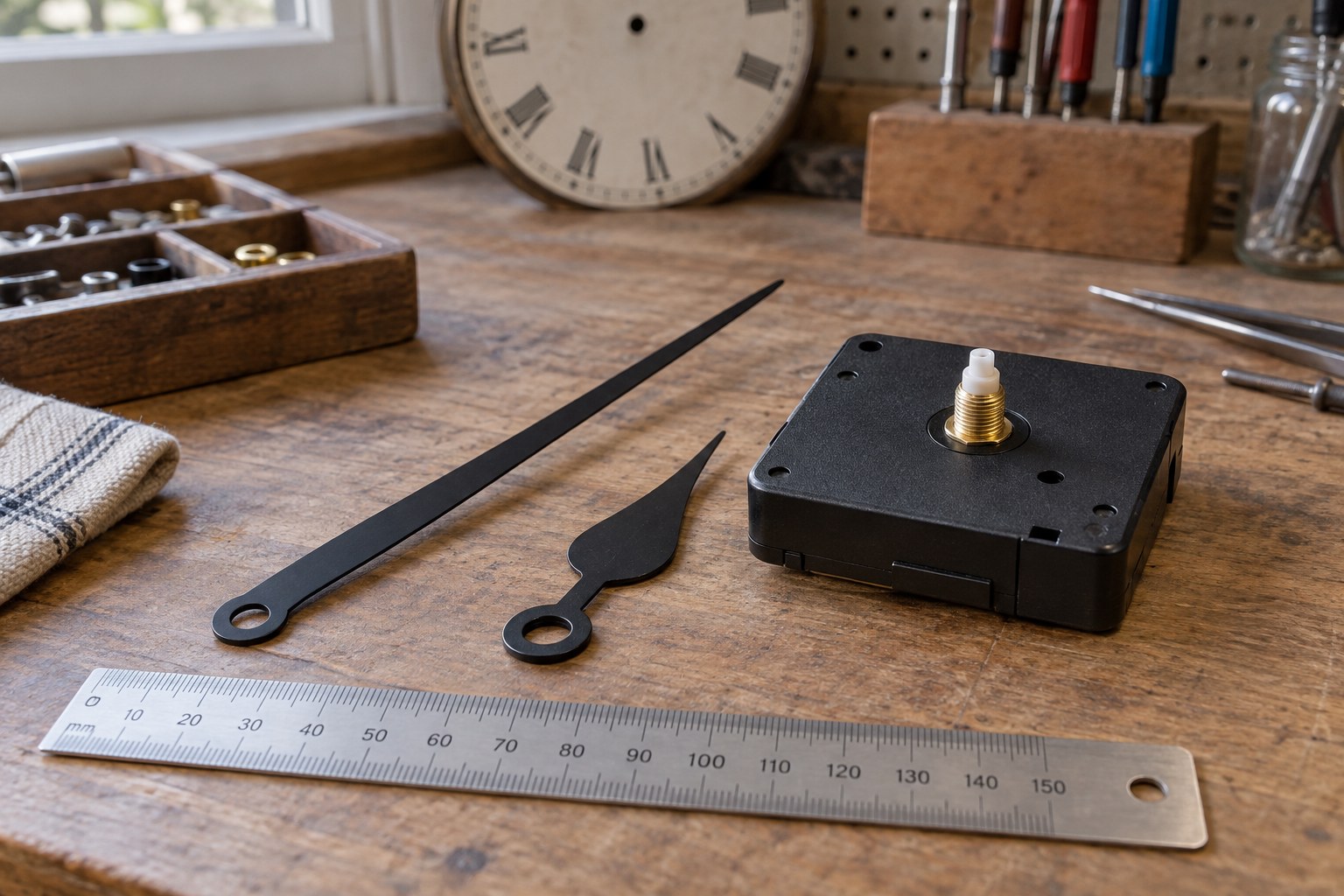
Measure the proposed minute hand from its mounting-hole centre to its tip. Note its material and any decorative counterweight. Send the actual product details to the movement supplier rather than describing it simply as a large clock hand.
Consider the whole face
A wide dial may invite long hands, but a shorter, broader pair can sometimes provide a clearer reading. Make a full-size paper layout before committing to the longest possible option. Check how the hand relates to the hour markers and whether its tip stays inside the usable face.
The larger assembly also needs adequate space around it. Raised numerals, a deep rim or a shallow cover can obstruct travel even when the movement is powerful enough. A stronger movement is not a remedy for a hand that physically touches another part.
Buy a documented combination
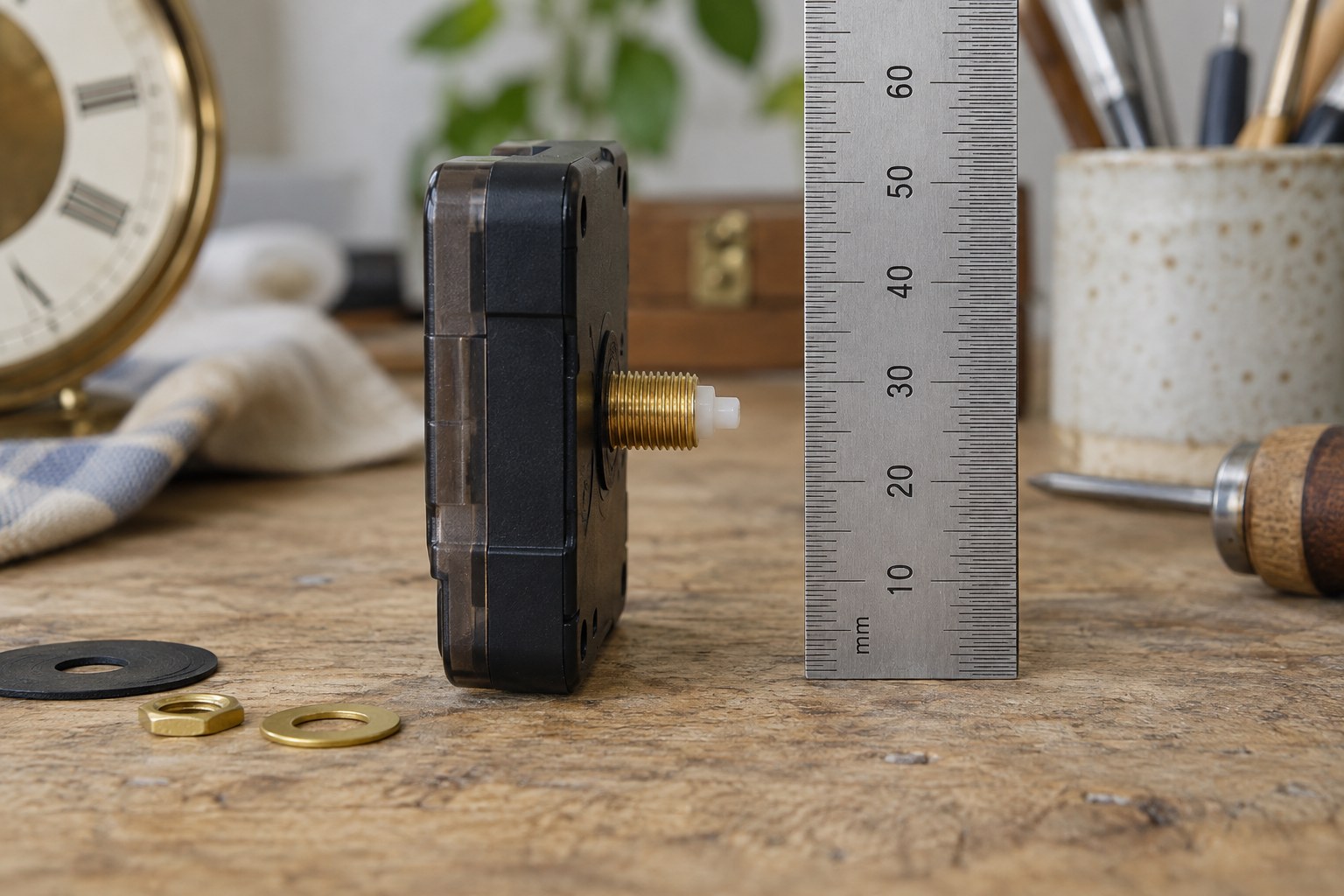
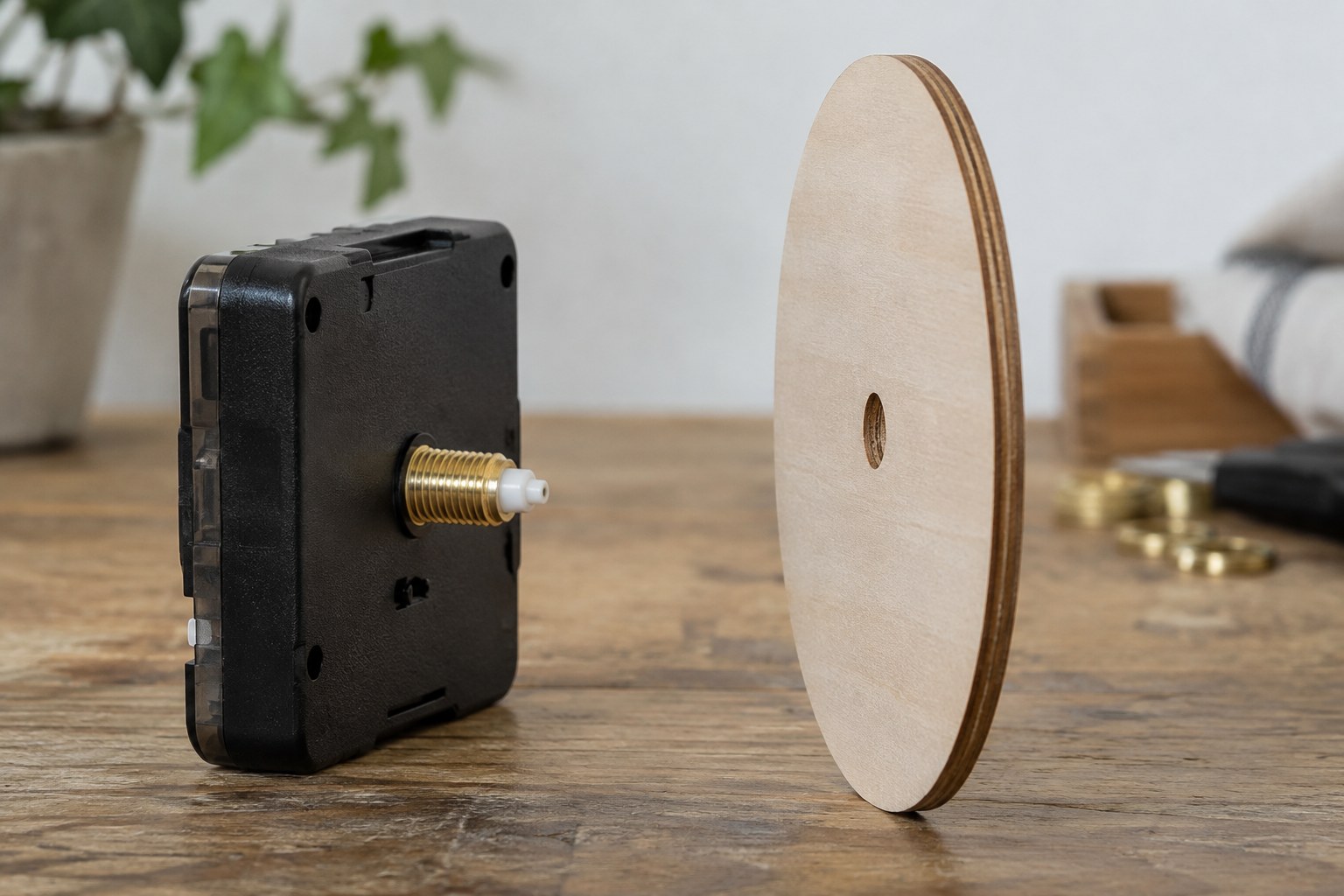
For a first oversized project, select a movement and hand set that the supplier explicitly pairs. Check shaft dimensions and dial thickness separately; greater driving capacity does not guarantee that the fixing suits your board. Keep the instructions with the component references for future replacement.
After assembly, test the clock upright and securely supported before mounting it high on a wall. Observe different hand positions and check the time against one reference over a useful period. If it stalls, remove the battery and review the fitting and clearances. Do not add oil or substitute a different battery type to make an unsuitable combination move.