Work from the route you take
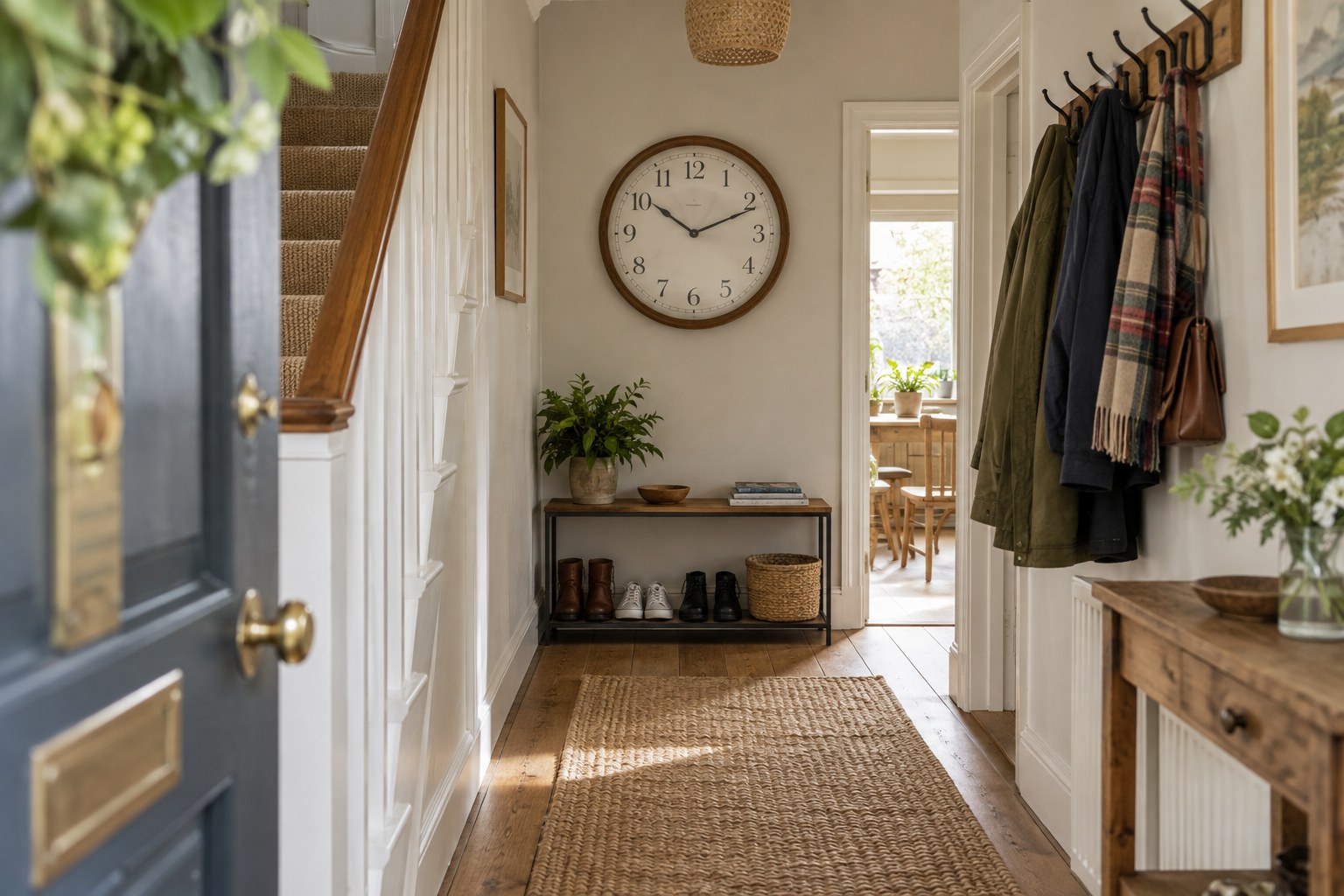
In a hallway, the best view is often oblique. Walk from the living area towards the front door and note which wall falls naturally into view. A clock directly above your head may be invisible until you have already passed it. A position facing the route can be more useful than the visual centre of the hall.
Try a paper dial at two possible locations. Read it from the point where you normally reach for keys or a coat. If you must stop, turn around or lean past a door, the location is asking too much of an object intended for a quick glance.
Include the things that move
Check the front door and internal doors through their full swing. A clock case projects into the space; even a modest projection can be vulnerable behind a door. Coats hung on pegs also occupy more space than their hooks suggest, particularly in winter.
A mirror can make a clock seem visible while reversing its face. Judge the actual dial rather than counting the reflected view as a useful second position. Tall visitors should not have to duck past a projecting case, and narrow circulation routes benefit from a shallow design.
Make evening checks realistic
A hall may receive daylight only through a small window. Test your chosen position with the normal evening light switched on. A plain dial and clear hands can be more helpful than a large but ornate face that becomes difficult to distinguish in shadow.
Before fitting, check the clock's weight and the wall construction. Keep it away from locations where bags are swung or parcels are stacked. Once installed, take the ordinary route through the hall again. The clock should offer the time naturally without becoming another obstacle beside the door.