There is no single kitchen height
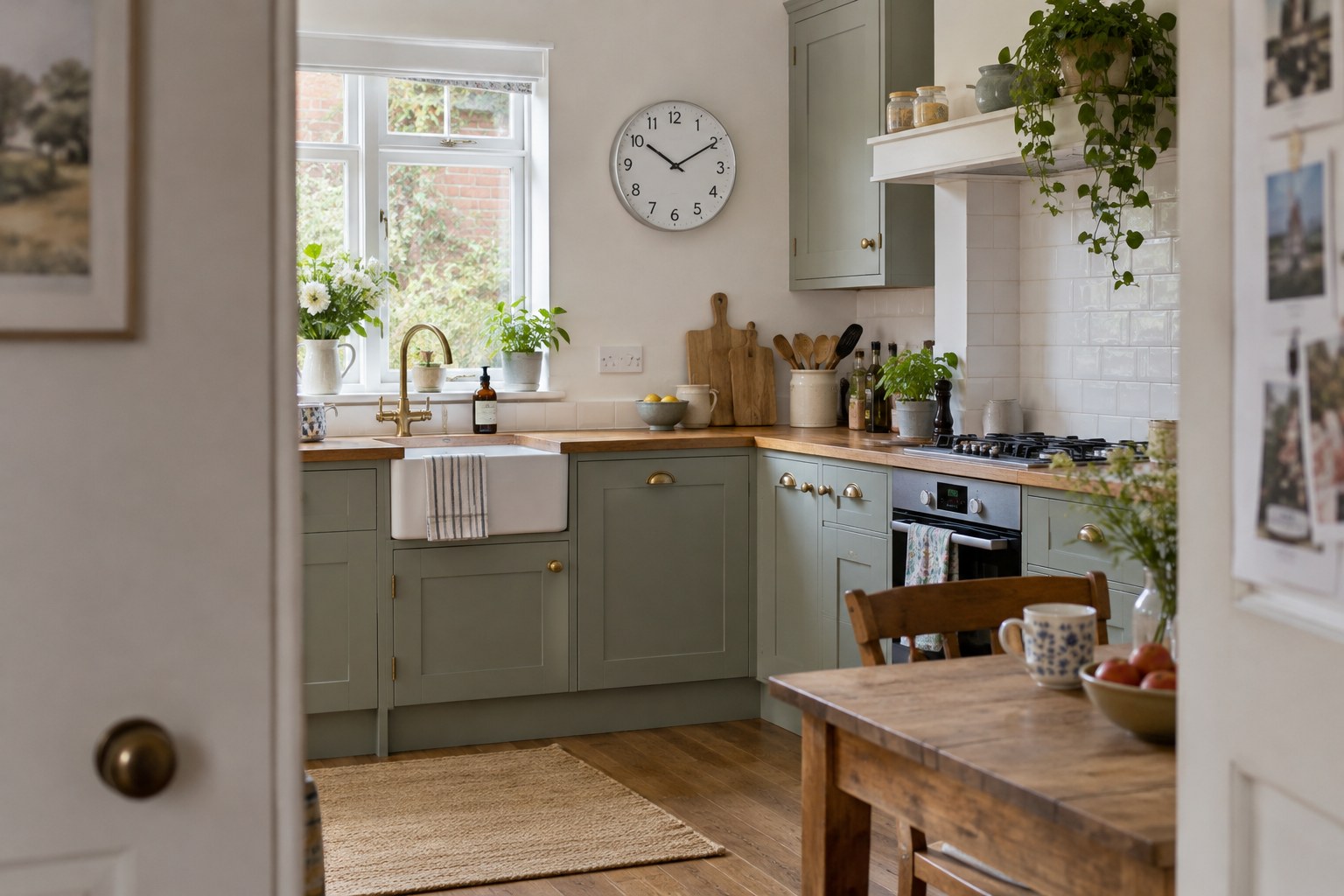
The useful height depends on where you look from. A clock intended for someone preparing food may need a different position from one read at a breakfast table. Stand at the worktop, sit at the table and pause in the doorway. Mark the area that can be seen from all three without looking behind a cupboard door.
Use a paper circle the size of the proposed case. Move it in small increments rather than assuming it should line up with the tops of the cabinets. A high ceiling can make that line surprisingly uncomfortable to read, especially when a light fitting hangs in front of it.
Keep the working zones clear
Avoid placing the clock where steam, grease or splashes routinely reach it. Being above a hob is not an advantage simply because the wall is empty. A dry stretch of wall nearer the doorway often gives a cleaner view and makes battery changes easier.
Open every neighbouring cupboard fully while the template is in place. Include the thickness of the eventual clock, not just the paper outline. Check whether a tall appliance, a drying rack or a door held open on a warm day would obscure it. These moving obstructions are easy to miss in an empty-room photograph.
Test before committing
Leave the template in view through normal kitchen use, then check the position after dark. If a pendant reflects in the planned face, a modest sideways move may help more than raising it. Make sure the hands will contrast with the dial under the lighting you actually use.
Once the position works, follow the clock's mounting instructions and use a fixing appropriate to its weight and your wall. Check for concealed services before drilling, and get suitable help if the location or construction is uncertain. Keep the final position reachable with safe access for routine care.