Choose what leads the arrangement
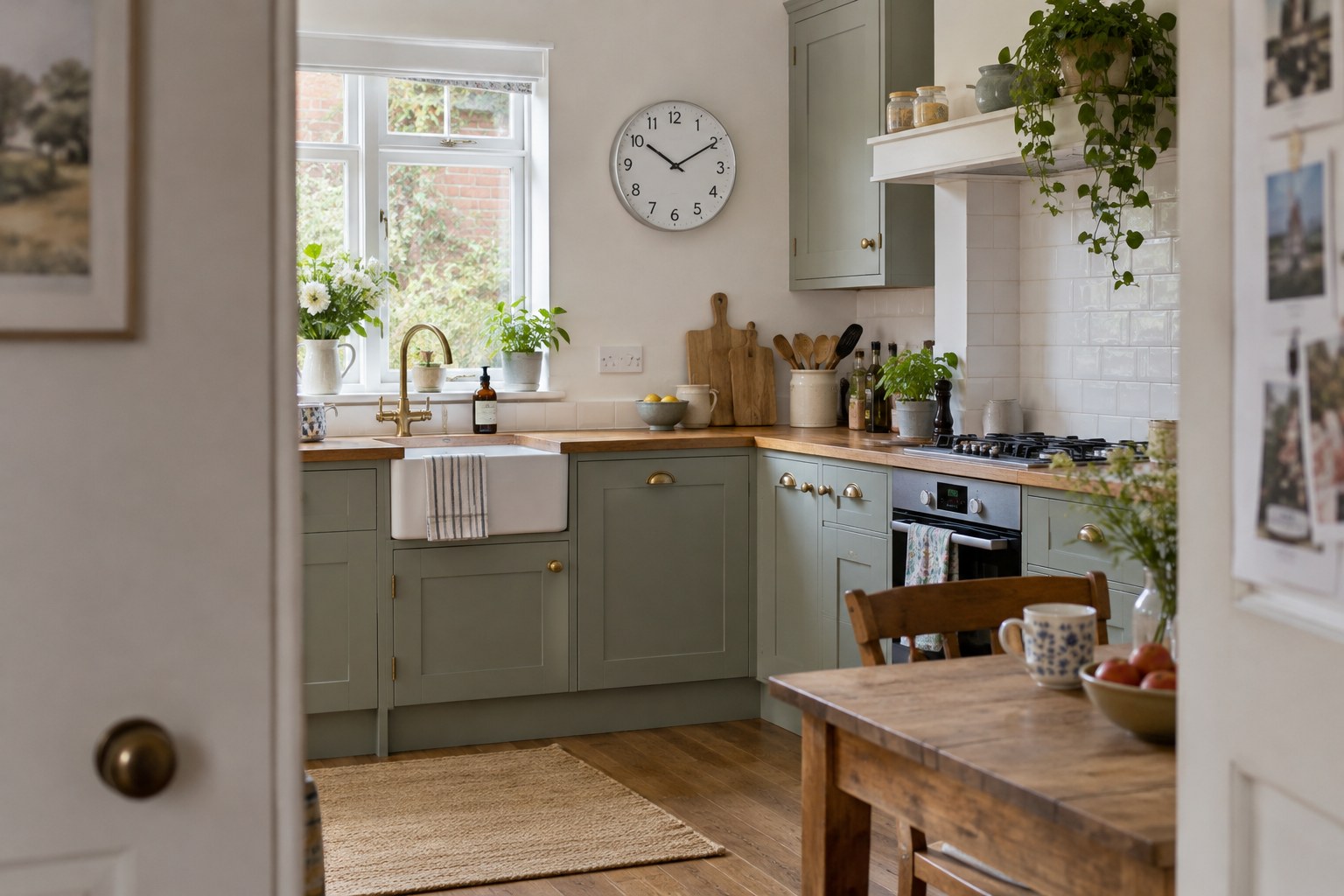
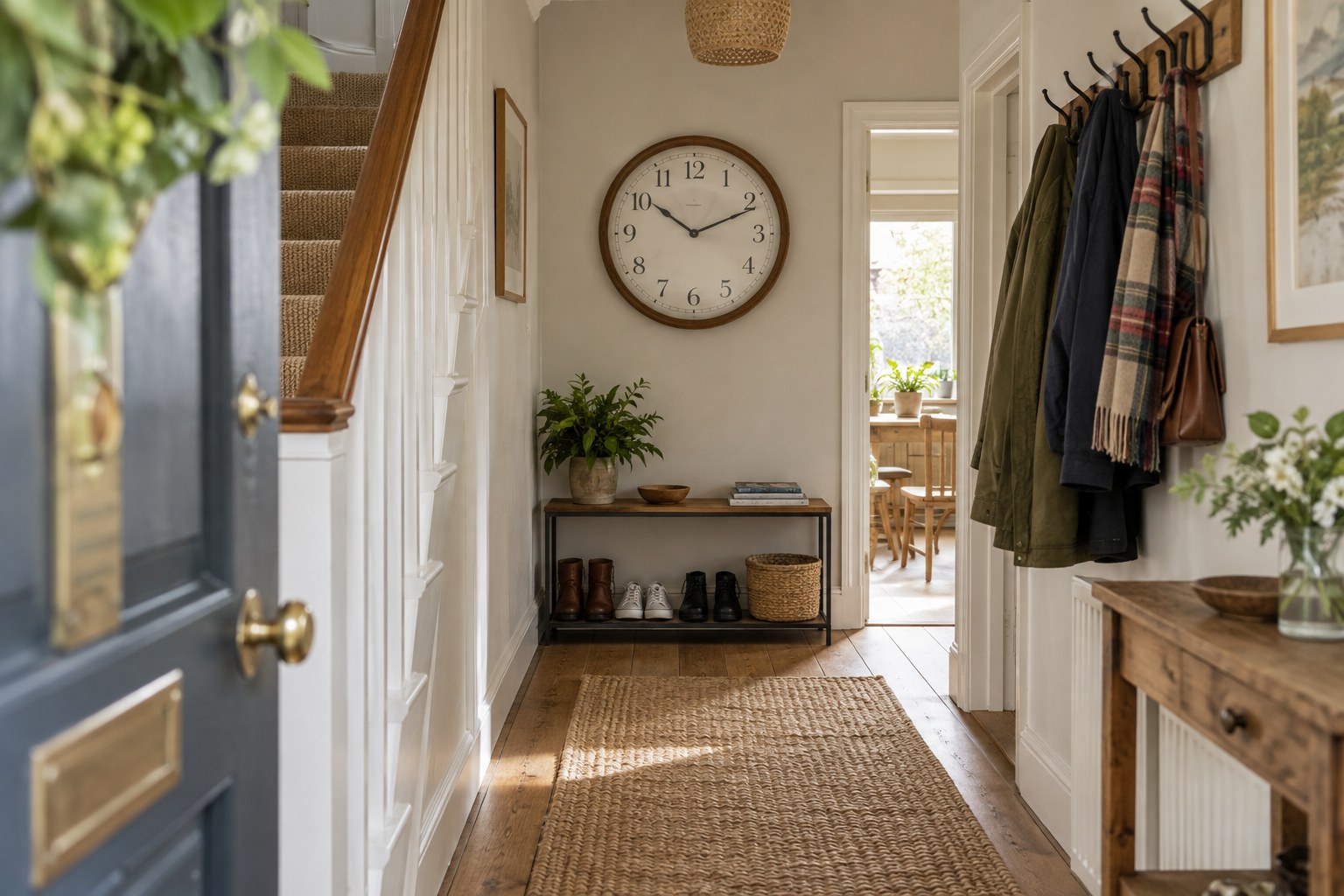
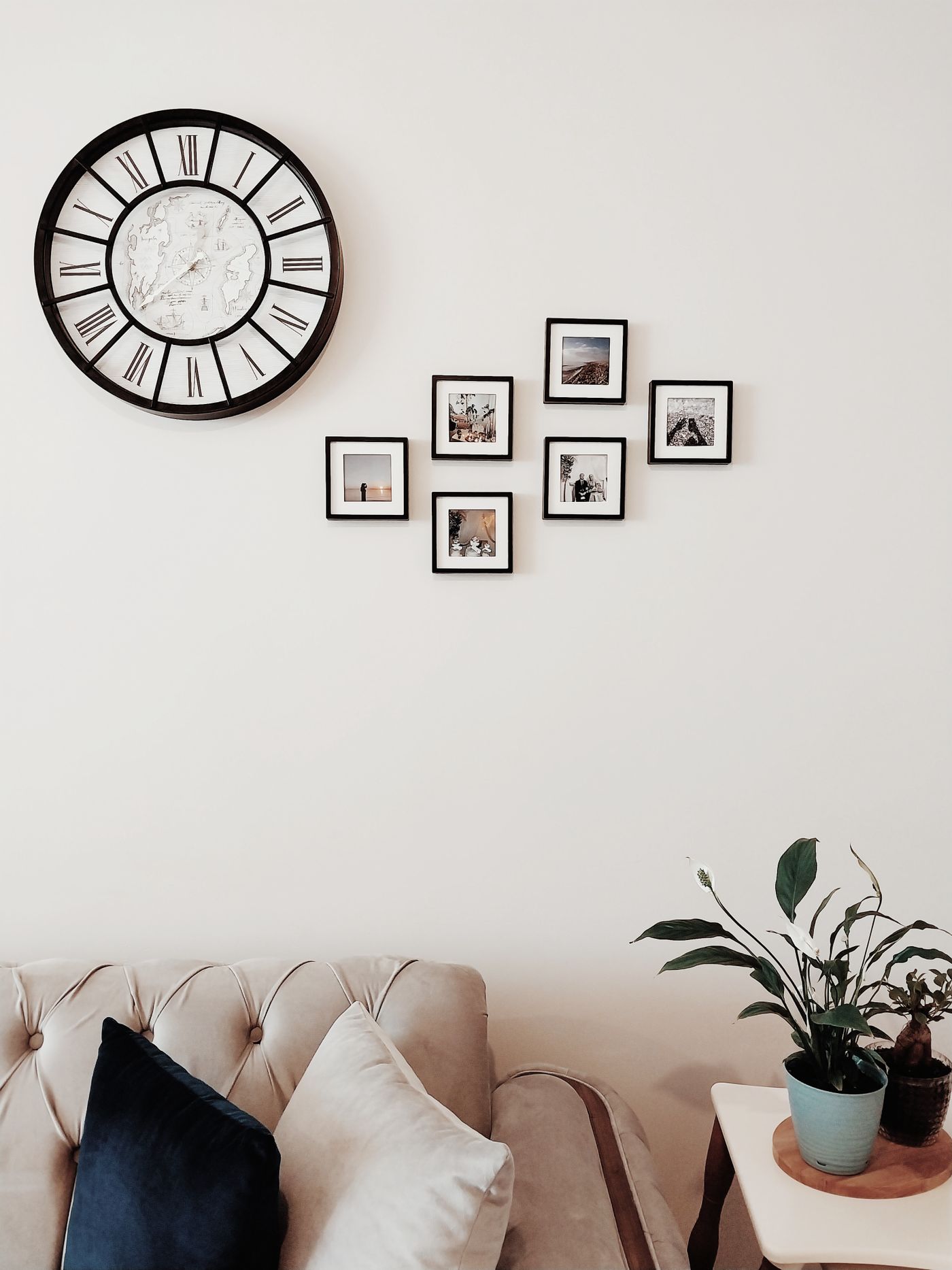
A large clock naturally attracts attention because it combines a recognisable circle with moving hands. Decide whether it is the main feature or part of a wider grouping. If every surrounding frame is equally bold, the wall can lose a clear point of reference.
Lay paper templates on the floor before attaching anything to the wall. Include the full outer dimensions of the clock and each frame. A photograph of this arrangement helps reveal crowded gaps that are harder to notice while you are moving individual pieces around.
Use a common line sparingly
One alignment can make an informal grouping feel deliberate: perhaps the centre of the clock matches the centre of a nearby picture, or two small frames share a lower edge. There is no need to align every edge. Forcing a circle into a rigid grid may create uneven-looking spaces around it.
Give the dial enough clear space that a neighbouring picture does not appear to grow out of the rim. The appropriate gap depends on the size and visual weight of the pieces. Stand at the room's normal viewing distance rather than judging every separation at arm's length.
Check function before final fixing
Make sure no frame edge conceals part of the clock from the sofa or doorway. A deep box frame can block an oblique view even when the arrangement looks open from the front. Check whether glass reflections on several objects compete at the same time of day.
Each piece needs its own suitable mounting method; do not improvise by hanging a frame from the clock's fitting. Leave room to remove the clock for maintenance without lifting an entire gallery wall. If the arrangement feels crowded, remove one small piece before deciding that the clock itself is too large.