Reserve a stable patch first
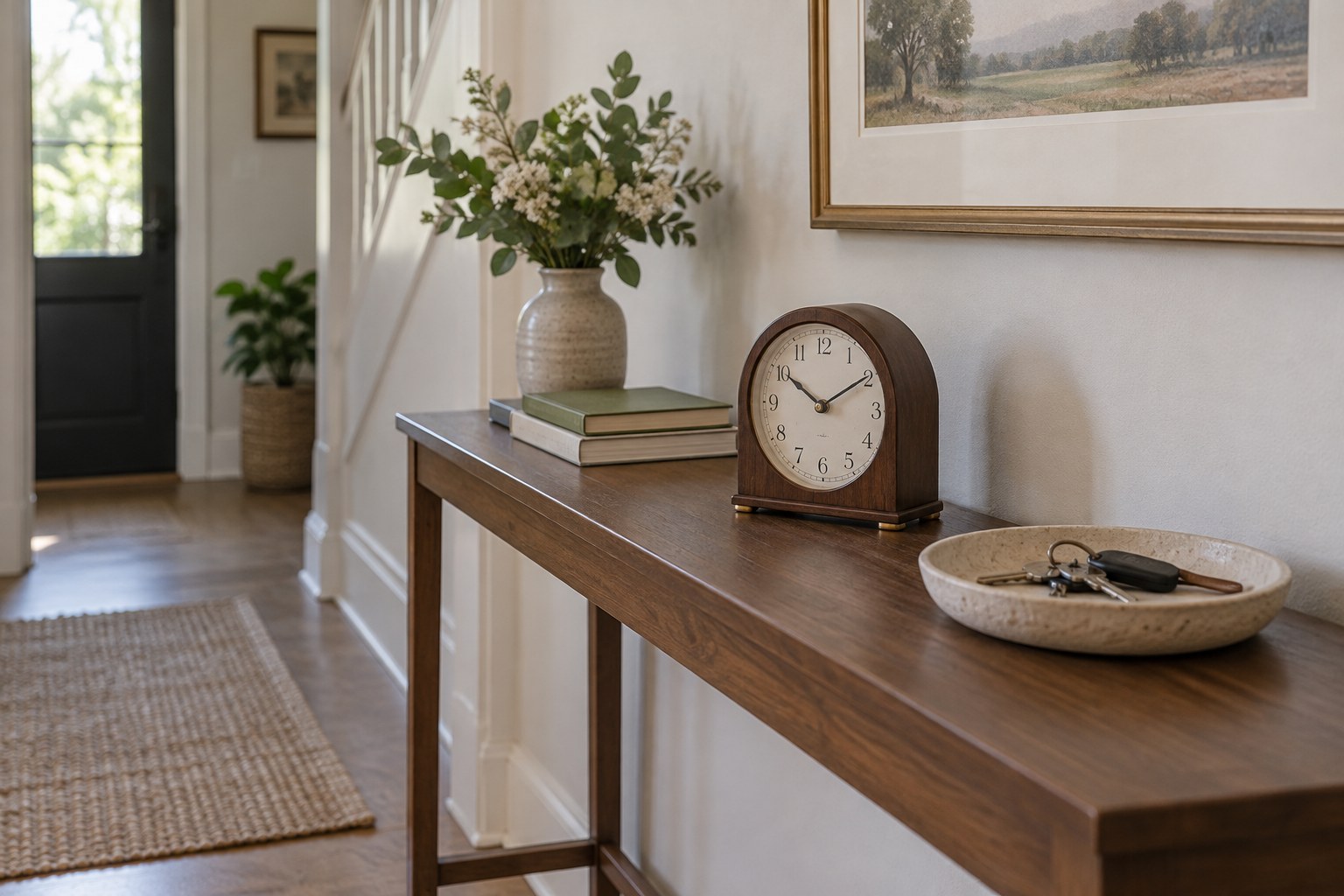
A console table is often shallower than it appears in a product photograph. Measure the usable depth after allowing for any wall gap, raised edge or decorative moulding. Compare it with the complete base of the clock, including feet and anything projecting at the back.
Set the clock towards the rear without forcing it against the wall. All support points should rest on a flat surface. If the base overhangs or the clock rocks, select a smaller model or a different position. A folded cloth is not a dependable answer to a poor fit.
Leave room for the table's real job
Watch what accumulates on the console for a few days: keys, post, a bag or a shopping list. Give those items a defined space away from the clock. A shallow dish for keys can reduce the chance of them being dropped against the case.
Keep the dial visible above the ordinary contents of the table. A low clock behind a large letter rack may look tidy only when the rack is empty. Try the view from the entrance and from the room beyond, because a console often serves two directions at once.
Avoid a precarious display
Do not stack the clock on loose books merely to gain height. Choose a model with an appropriate stand, and check that the furniture itself is stable and secured where its instructions require it. Narrow hallways and busy routes make a prominent projecting object particularly vulnerable.
Limit the nearby decoration to pieces that leave room for lifting the clock safely. A mirror behind the table can create useful visual space, but check whether it reflects a bright window into the face. The final arrangement should remain orderly when someone comes home with bags, rather than depending on careful movement around a fragile display.