Make a quick external check
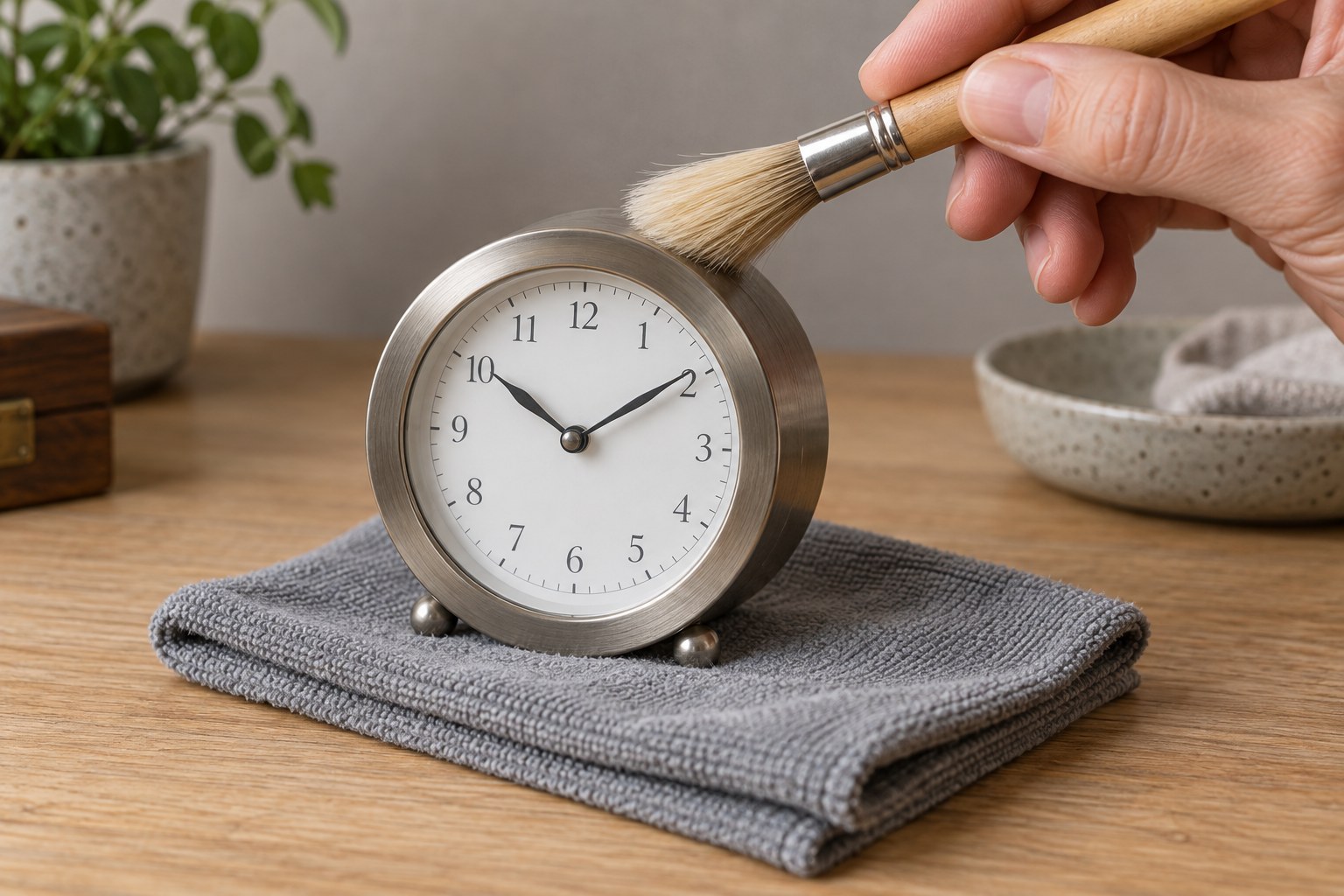
Look at the clock's visible condition while it is safely accessible. Check the case, cover and hanging arrangement for a new crack, looseness or unusual tilt. Notice whether furniture changes have made the dial harder to read or blocked safe access. If the clock is high on a wall, do not stretch to inspect it; plan safe removal or assistance. Compare with an earlier photograph if you are unsure whether a mark is new. This is a condition check, not a requirement to open the movement or clean every surface.
Review power and settings
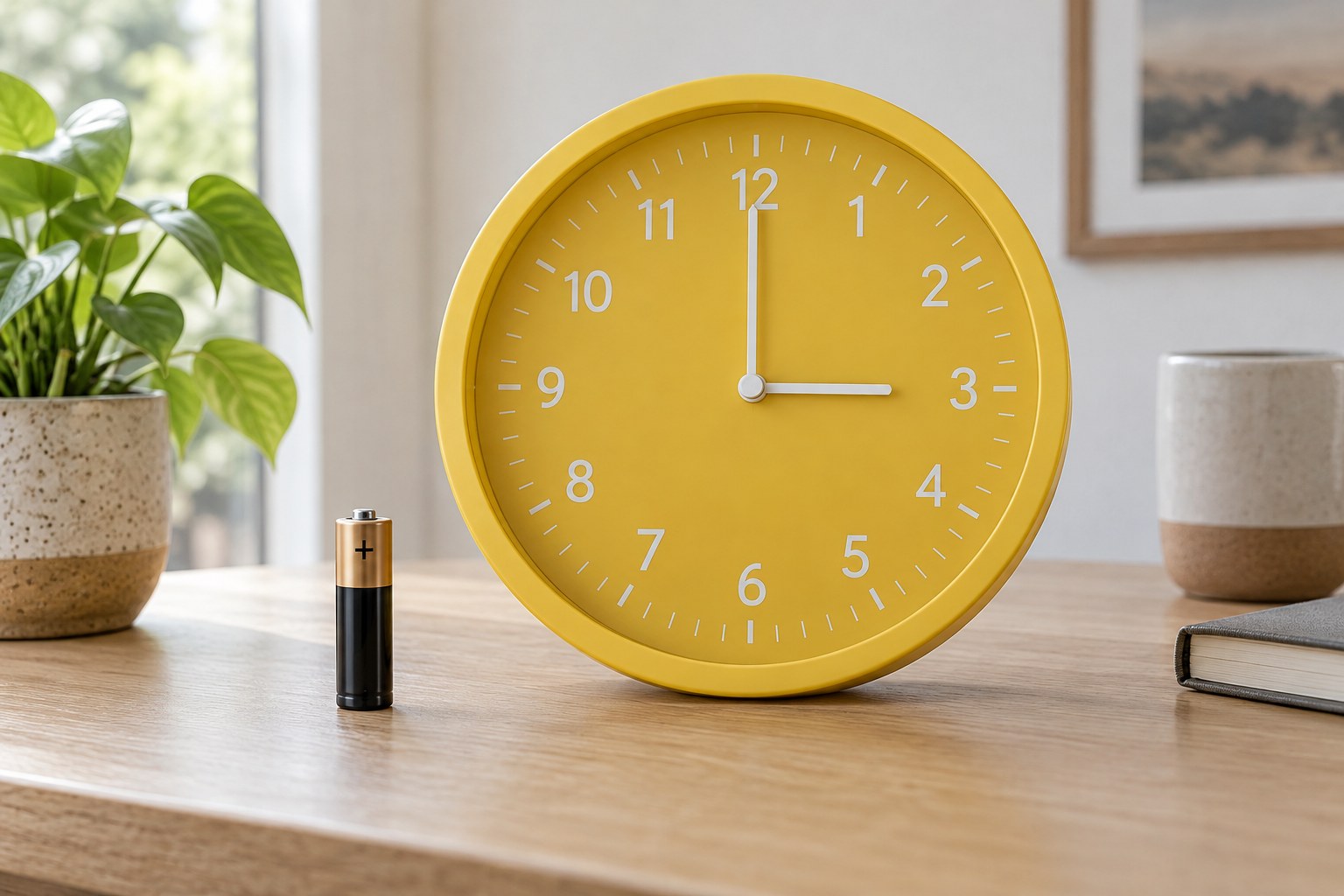
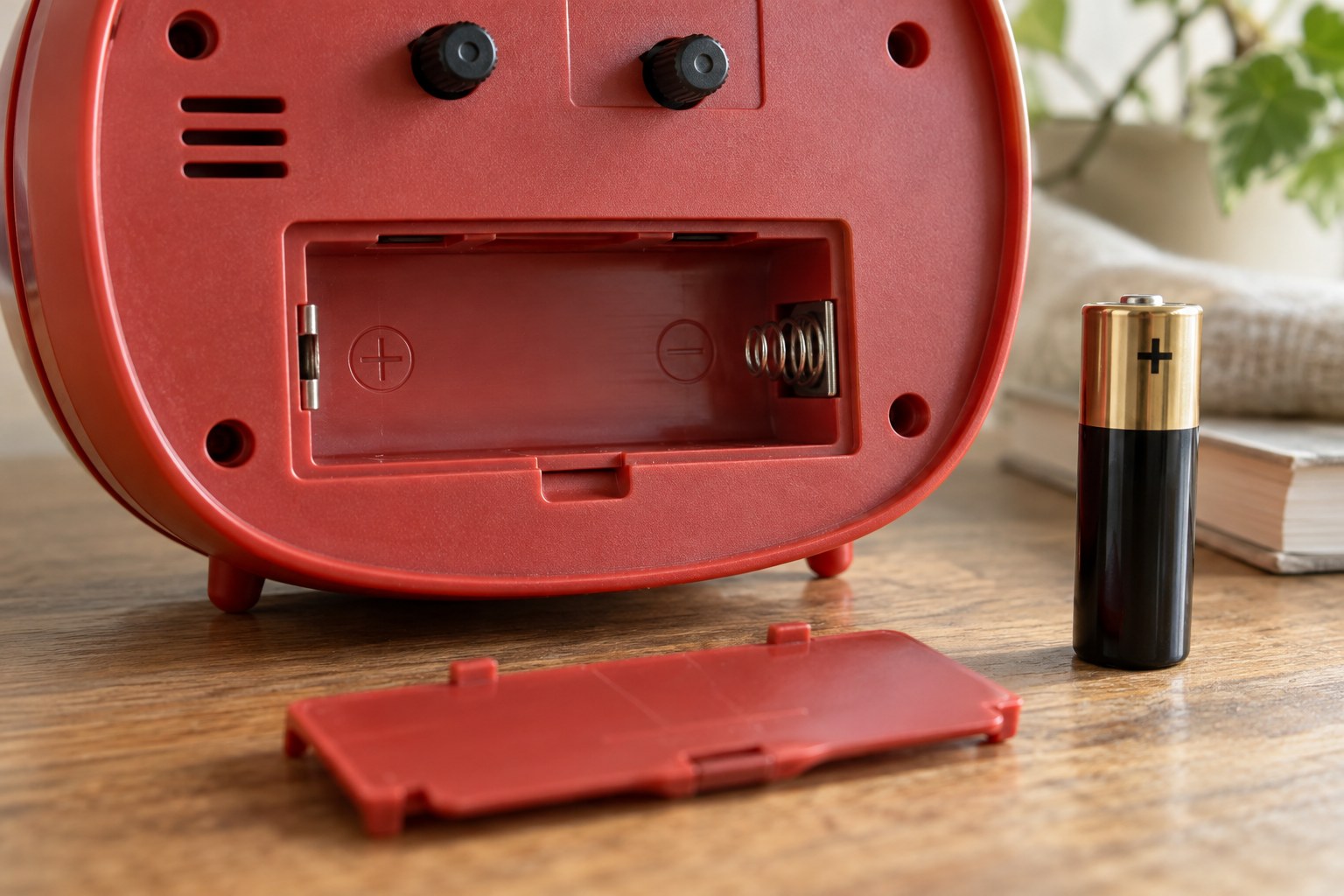
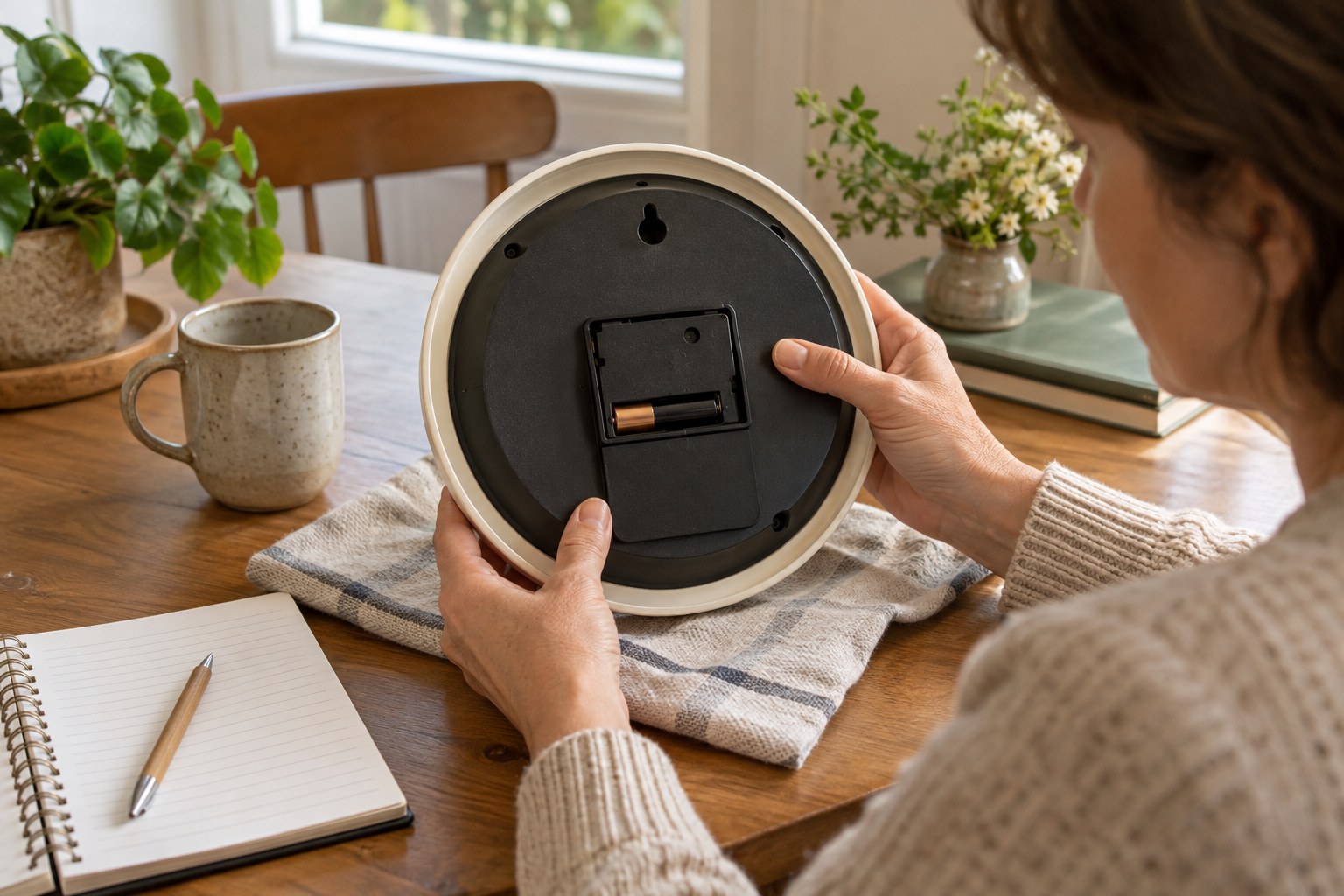
Check the displayed time against a reliable reference and confirm any alarm setting you use. Look at the battery compartment only through its intended owner-accessible cover, following the manual. If batteries are depleted, replace them as specified; if there is residue or damage, stop and seek advice. For a radio-controlled clock, check its reception indicator and the instructions for seasonal time changes rather than forcing the hands. A clock that has missed an update may need a permitted reception check, while a non-radio model needs its own setting method.
Adjust the plan for the coming months
Sunlight can reach different parts of a room as the seasons change, and heating may make a previously cool wall warmer. Consider whether the clock's location remains within its stated conditions. For an outdoor model, follow any instructions about winter storage or sheltered positioning. Note the date of any battery change and keep the model details nearby. If you notice repeated stopping or a new sound, record the pattern and arrange advice instead of repeating the same reset indefinitely. A brief, specific record is more useful than a large checklist with no follow-up.