Decide whether surface cleaning is appropriate
This routine is for the outside of a modern clock with a stable, intact case. It is not a method for cleaning a movement, an exposed dial or a valuable antique. If the finish is flaking, the face has loose decoration or you do not know what an old luminous coating contains, leave the surface alone and seek advice from a suitable repairer or conservator.
Read the clock's care instructions first. A maker may specify a dry cloth and prohibit particular cleaners. Take a wall clock down safely rather than reaching over furniture; put it on a clear, padded surface where it cannot roll or slide. Do not rest its weight on projecting hands or controls.
Lift loose dust without chasing it inside
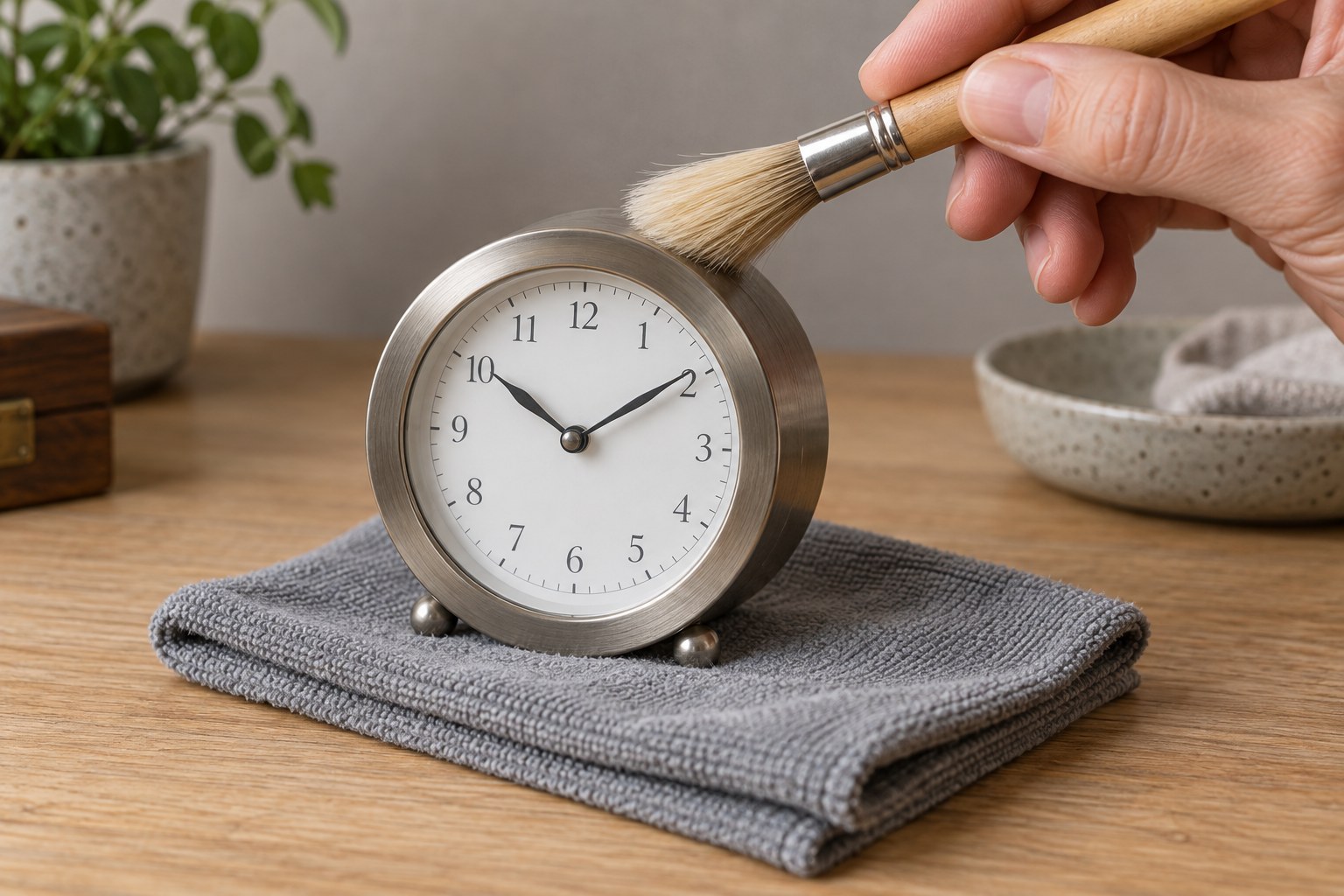
Choose a clean, soft brush with no traces of paint, polish or abrasive dust. Test a light stroke on an inconspicuous, sound area. Work gently over the outer rim and broad case surfaces, lifting dust away rather than pressing it into a seam. Keep the brush away from ventilation slots, the shaft opening and any exposed mechanism.
For an ordinary smooth case, a clean dry microfibre cloth may be enough on its own. Fold it to present a fresh surface as it collects dust. Stop if colour transfers to the cloth, a finish catches or a decorative part moves. More pressure is not a useful diagnostic tool.
Leave wet products out of the first pass
Do not spray glass cleaner, furniture polish or water towards the assembled clock. Liquid can travel around a cover edge even when the middle looks sealed. Follow the model's instructions if a remaining mark needs further treatment, and keep any permitted cleaning method confined to the specified material.
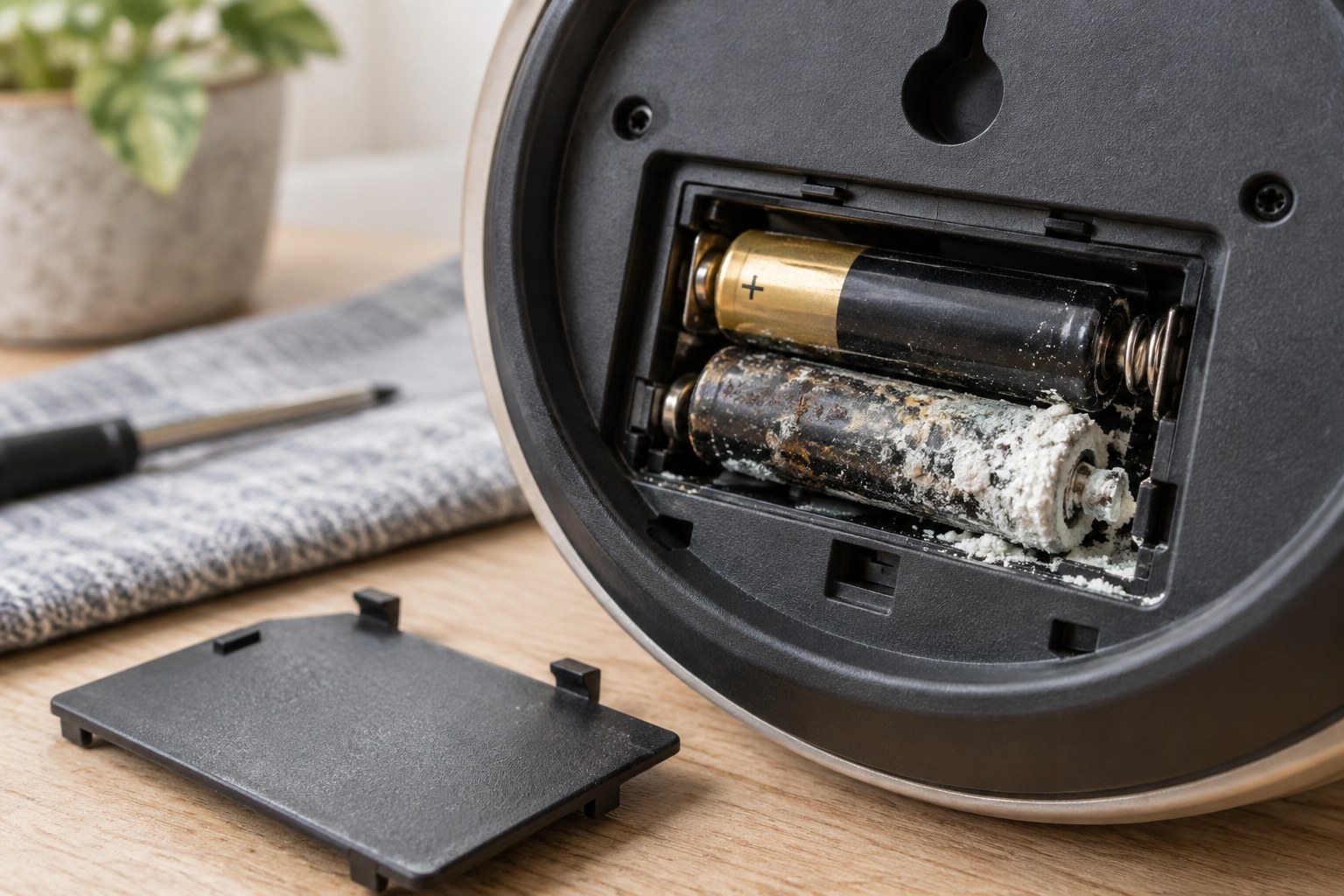
Before rehanging, check that the back, battery cover and hanger remain secure. Record any crack or loose part you noticed so that it is not forgotten. Regular light dusting of a sound case is a smaller job than trying to remove a thick layer after it has settled into decorative edges.