Look before you touch
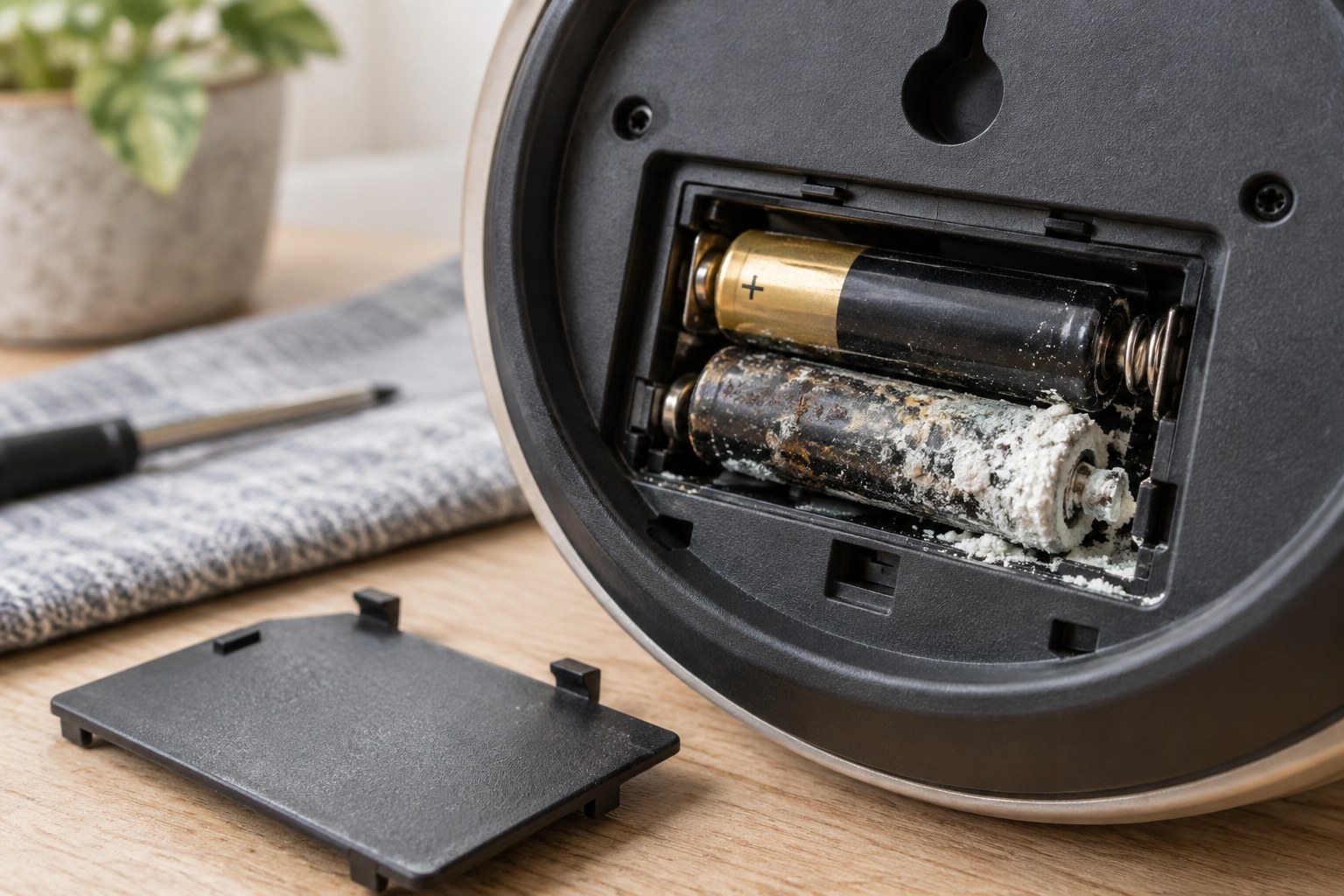
When opening an owner-accessible compartment, inspect it before putting your fingers around the cell. Powdery deposits, staining, dampness, a damaged wrapper or a distorted battery deserve attention. The appearance alone does not identify every substance or establish that it is harmless. Do not rub a deposit to find out what it is, smell it closely or brush it onto the table. Keep children and pets away from the clock while you decide what to do. If the battery is unusually hot, do not continue the routine inspection or try to make it fit again.
Keep the response limited
Stop using the clock and consult the battery maker's handling guidance and the clock manufacturer's advice. Give them the cell type and a photograph taken without disturbing the residue. Do not force a stuck battery out with a metal tool, puncture it or open it. Avoid improvised cleaning with vinegar, bicarbonate, household sprays or abrasives; the chemistry and damage may not be what you assume. If safe removal is unclear, ask a repairer or an appropriate local disposal service how to proceed. A clock is not worth turning a small contained problem into scattered contamination.
Prevent a repeat where possible
For a sound clock in ordinary use, follow its specified battery type and polarity, replace depleted cells promptly and do not mix old and new cells in a set. Remove batteries before long storage when the instructions call for it. Keep loose replacements in their packaging rather than against coins or tools. After a leakage incident, do not fit another battery until the compartment and clock have been assessed as suitable for reuse. Record the date and the advice received so a later owner does not mistake a damaged compartment for one that merely needs power.