Confirm what the cover is
A clear front may be glass, acrylic or another plastic. Check the manual before selecting a cleaner, because a product suitable for household windows may not suit the clock's cover or coating. Look for cracks, loose edges and damaged seals. If the front is unstable or the dial behind it is flaking, leave it alone and seek advice. This routine concerns an intact modern clock exterior. It does not involve removing the cover, cleaning the dial or reaching through an opening to wipe the inside.
Control the moisture
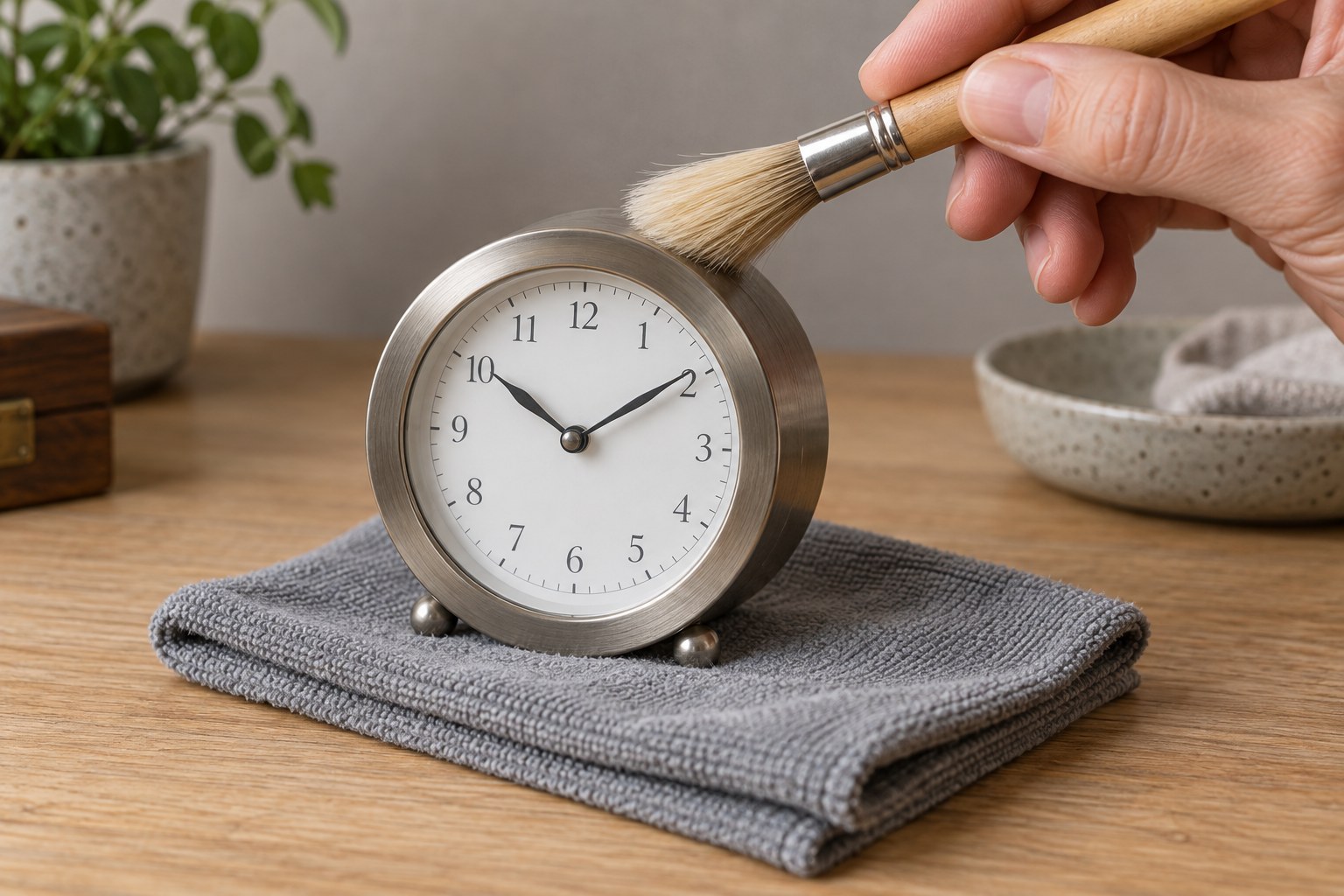
Take the clock down safely and support it so that pressure on the cover is unnecessary. Use a clean, soft cloth and only the cleaning approach allowed by the maker. Where a lightly damp cloth is permitted, apply the small amount of moisture to the cloth away from the clock, not as a spray onto the face. Keep it clear of seams, the central shaft and controls. Work with gentle passes rather than pressing hard on a stubborn mark. If the mark does not lift with the approved method, stop instead of escalating to a stronger solvent.
Check the result before rehanging
Inspect the edge of the cover for any moisture and make sure the exterior is dry as directed before returning the clock to its position. Avoid polishing around an opening in a way that pushes liquid inward. If a cloudy patch is inside the cover, outside cleaning will not resolve it; it needs a different assessment. Store the cleaning cloth separately from those used with furniture polish or abrasive products. A dedicated cloth reduces the chance that the next simple wipe introduces an incompatible residue to an otherwise sound surface.