Reduce the dust arriving at the clock
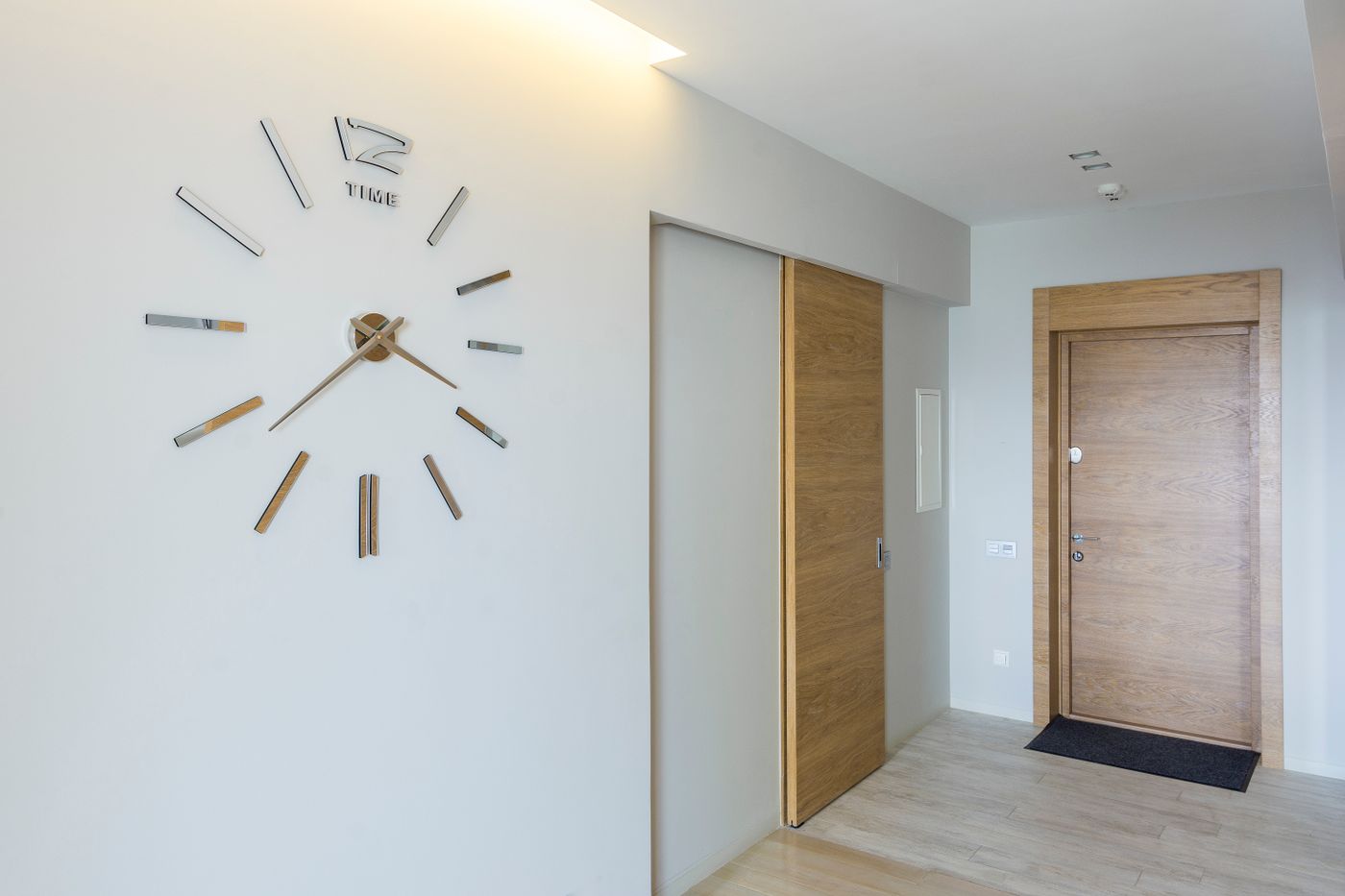
Open-face designs leave the hands and dial accessible to airborne dust. Choose a position away from cooking grease, frequently opened external doors and shelves where dusty objects are moved often. Keep the surrounding wall and furniture clean without spraying towards the clock. If work in the room will create dust, such as sanding or decorating, move the clock to a suitable clean location beforehand. Do not drape a cloth directly over exposed hands; even a light covering can catch them or bend a delicate part.
Respect the different surfaces
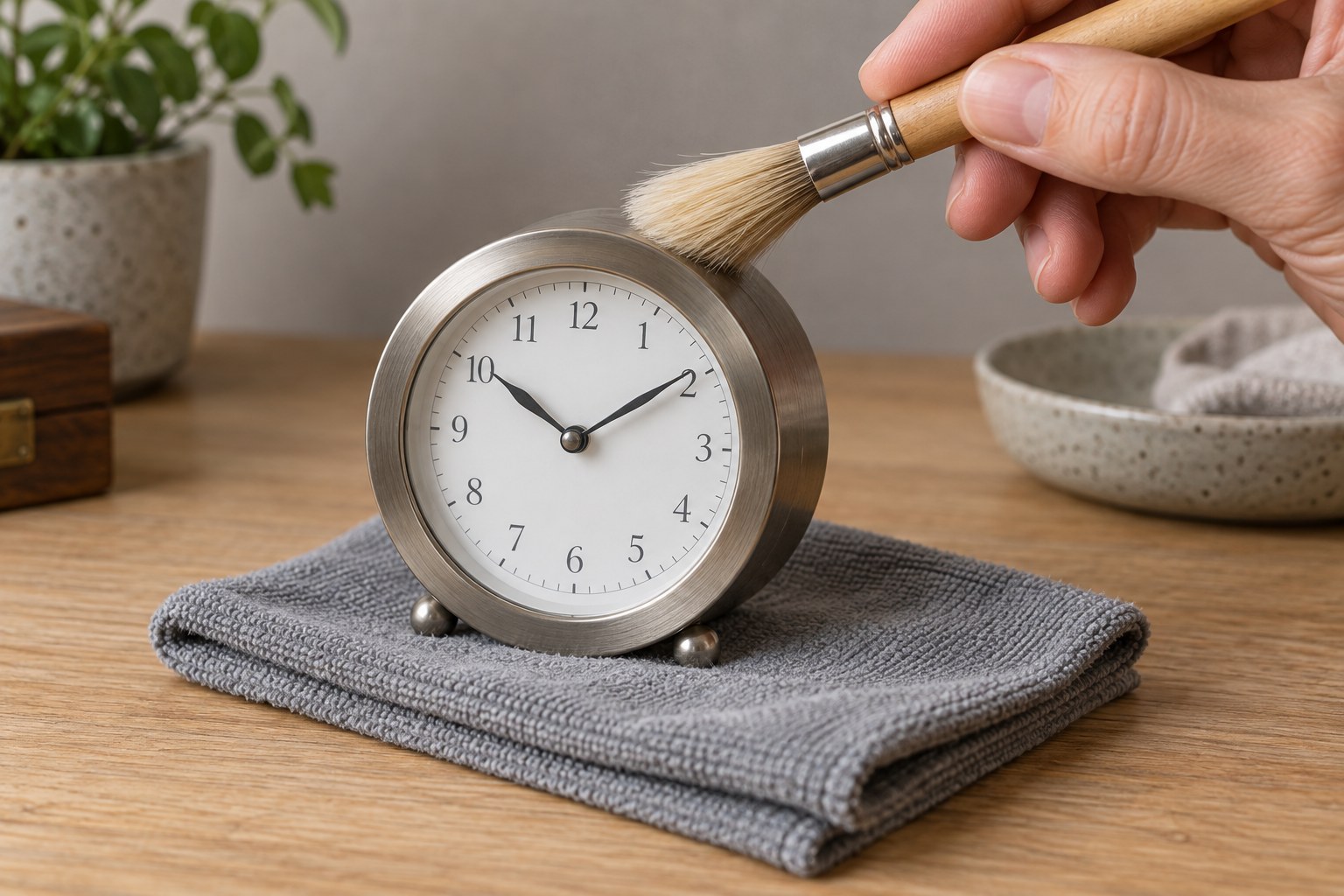
The case, dial and hands may require different treatment. A method permitted on the outer frame does not automatically apply to printed numerals or painted hands. Follow the maker's care guidance and keep brushes and fingers away from the shaft and mechanism. If dust is sitting on a vulnerable dial, resist wiping it simply because it is visible. An older or uncertain finish needs advice from a suitable conservator or repairer. Unknown luminous paint, flaking decoration and loose markings are reasons to leave the face undisturbed rather than try a household cleaning method.
Make maintenance a buying consideration
Before choosing another open design, ask how the manufacturer expects the owner to clean it. A clear answer may be more valuable than a dramatic photograph of long, exposed hands. If the intended room is dusty or greasy, a clock with a protective cover may be more practical. For the clock you already own, keep a photograph of its condition and note any change without touching the dial. When moving it, support the case and provide clearance around the front. Dust prevention should not introduce a greater risk from handling or pressure.