Identify the material and its limits
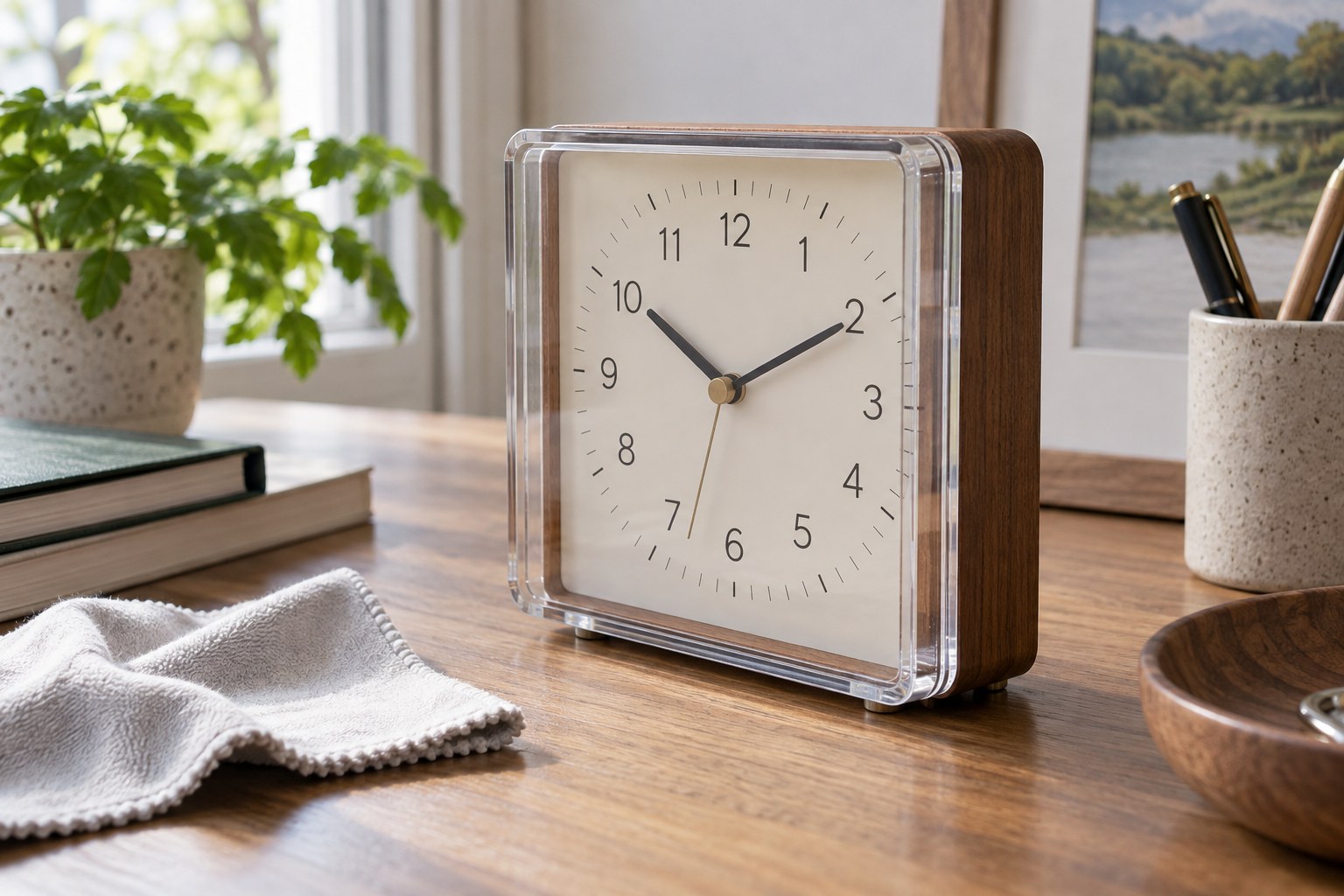
Check the clock's manual to confirm the cover material and any coating. Clear plastic is not always identifiable by appearance alone. Acrylic manufacturers warn that dry rubbing can scratch the surface, but guidance for a free sheet is not permission to wet an assembled clock. The clock maker's care instructions must also protect the dial, seams and movement. If the cover is cracked, loose or already clouded, ask about replacement or suitable care before applying anything. Do not begin with a household glass cleaner because the surface looks transparent.
Use a controlled surface method
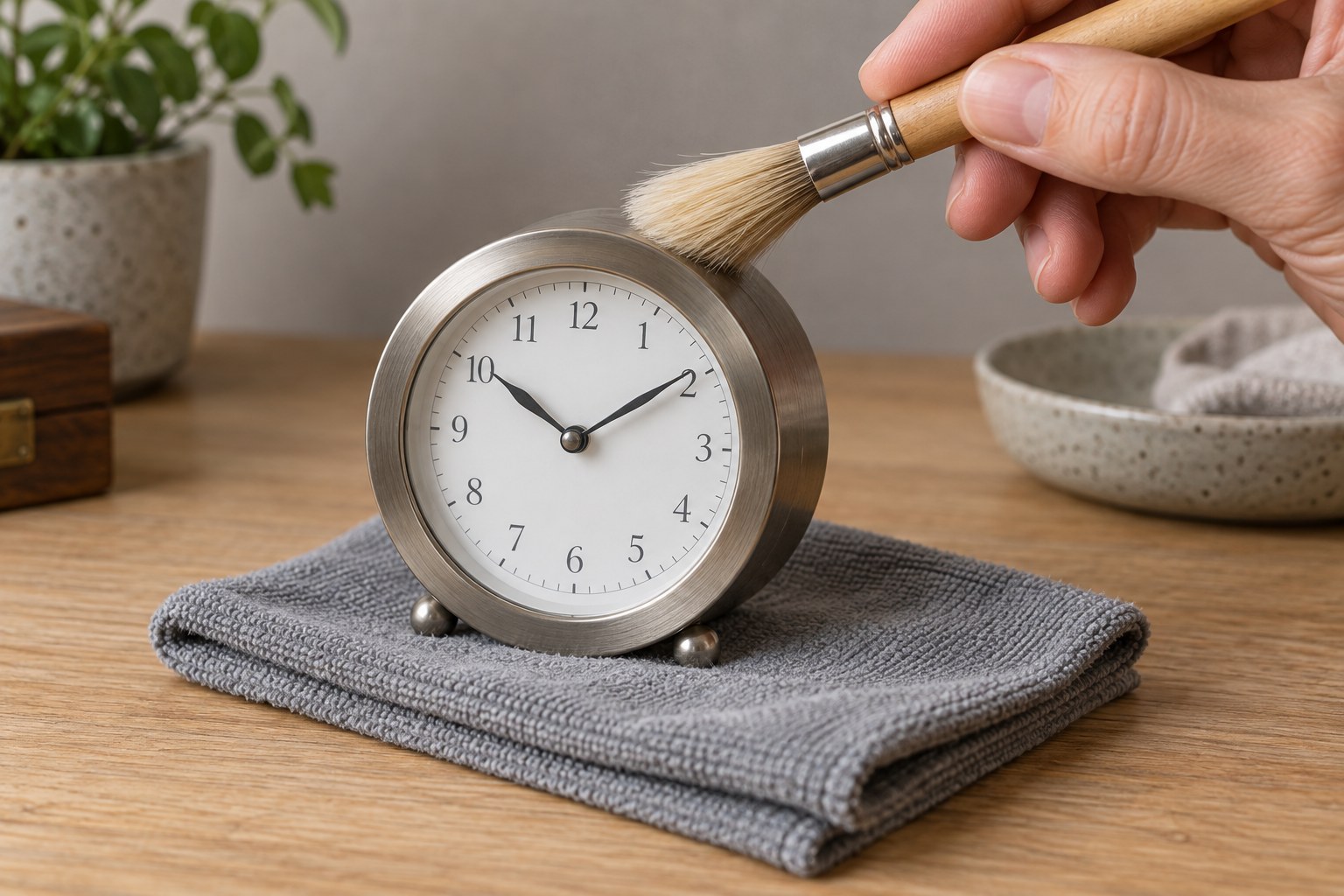
Where the clock's instructions permit a lightly damp, soft cloth, use a clean cloth with no abrasive grit or polish residue. Moisten it away from the clock and avoid droplets. Work gently on the exterior, keeping moisture away from edges and openings. Never spray the face directly or immerse a removable-looking cover without confirmation that removal and washing are intended. Stop if the mark needs pressure or a stronger product than the manual allows. Do not use scouring pads, abrasive creams or a polishing compound as an improvised cure for scratches.
Prevent the next mark
Handle the case rather than gripping the clear front, and keep the clock where other objects will not rub against it. Store a dedicated soft cloth separately from cleaning supplies used on metal or furniture. When moving the clock, protect the cover without pressing dirty packing material against it. A scratched cover may need a manufacturer-approved replacement rather than repeated polishing that changes its appearance. Keep the model number available so the right part can be identified. On an old or unusual clock, seek advice before treating the cover as a standard modern acrylic component.