Notice when the sound occurs
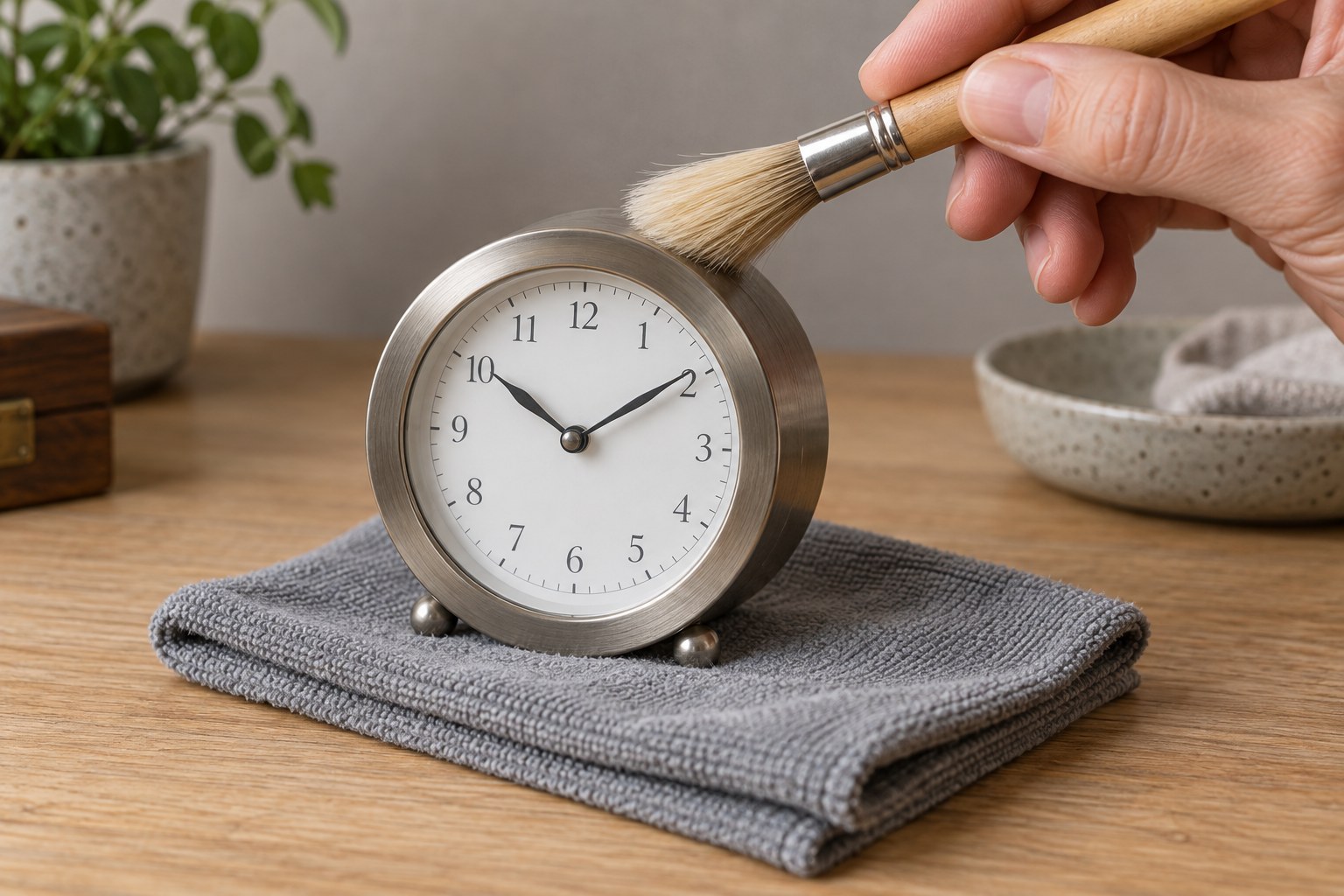
Write down whether the noise happens during normal running, when a button is pressed or only when the case is moved. Think about recent events: a battery change, a fall, transport or an adjustment to the stand. A loose compartment lid may be different from a sound deep inside the mechanism, but do not assume either explanation without checking. Keep the clock still on a safe surface and inspect the outside for a visibly loose owner-accessible cover. Avoid repeatedly tilting or shaking it to make the noise recur.
Check only the intended access points
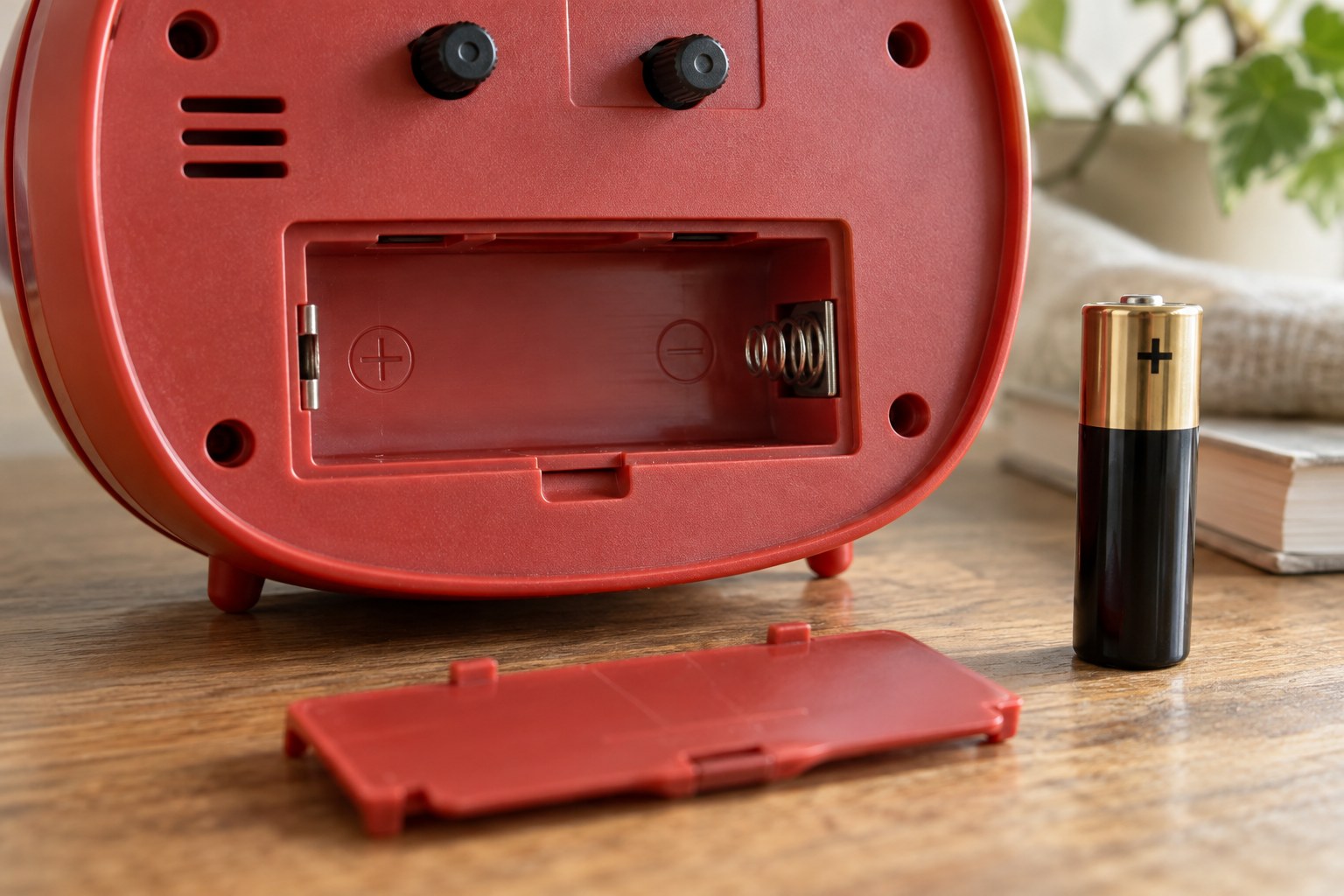
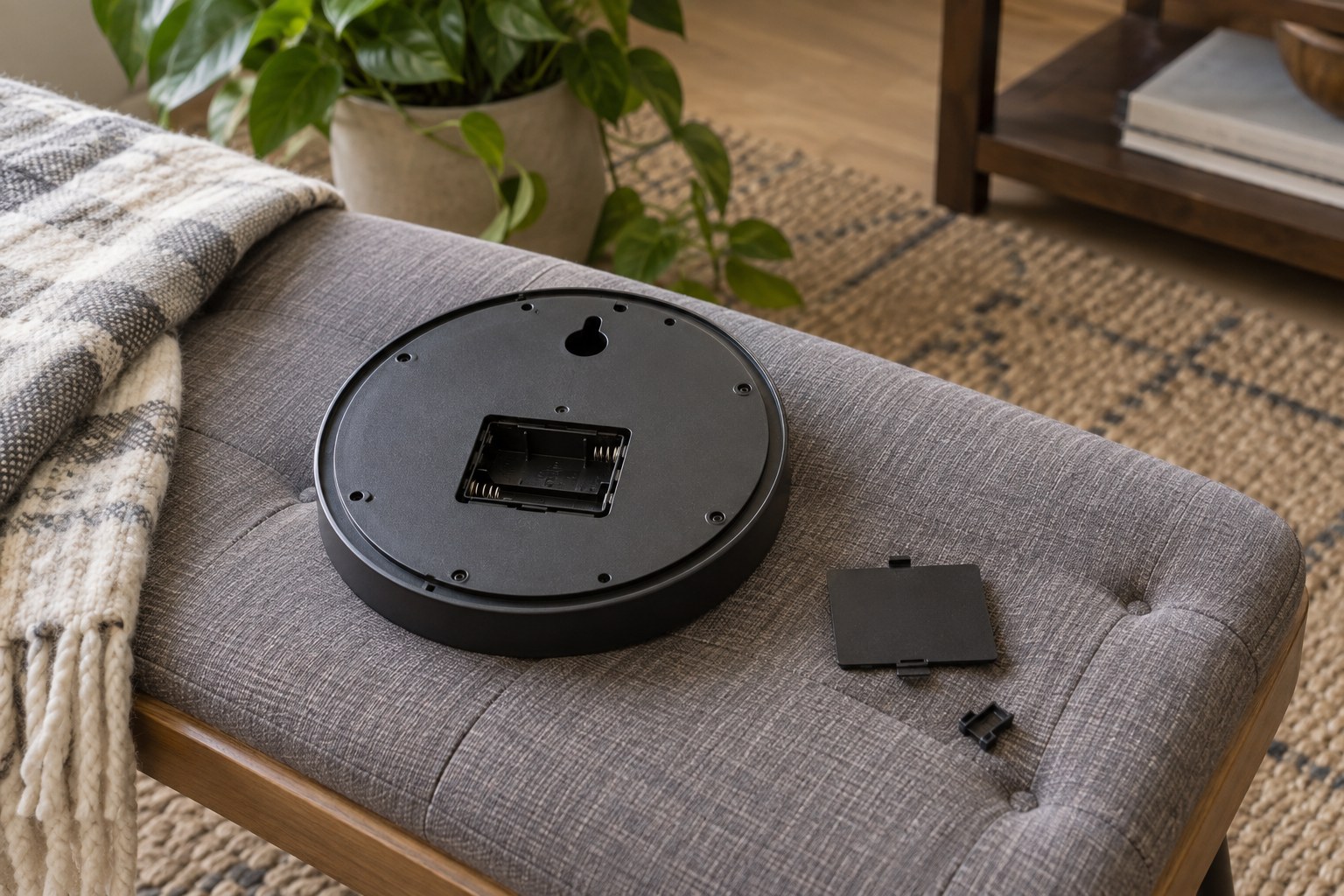
Read the manual before opening any cover. If the battery lid has not been seated correctly, refit it using the documented method without forcing its clips. Inspect the normal stand or hanging attachment for visible looseness. Do not remove a sealed rear panel or fish through an opening with tweezers. A loose internal part may cause further damage if the clock continues to run or is moved unnecessarily. For a powered model, follow the manufacturer's instructions for taking it out of service; do not attempt electrical work inside the case.
Make the enquiry specific
Take a short recording if the sound happens naturally during ordinary operation, and photograph the model label. Explain when it started and whether the clock still keeps time. If a small part has fallen out without dismantling, keep it in a labelled container rather than guessing where it belongs. Ask the maker or repairer whether the clock should be transported and how to protect it. A recently delivered clock may need a seller's inspection rather than a home repair. Preserve the evidence while preventing more movement than necessary.