On the workbench
Plan the fit before changing the parts.
20 guides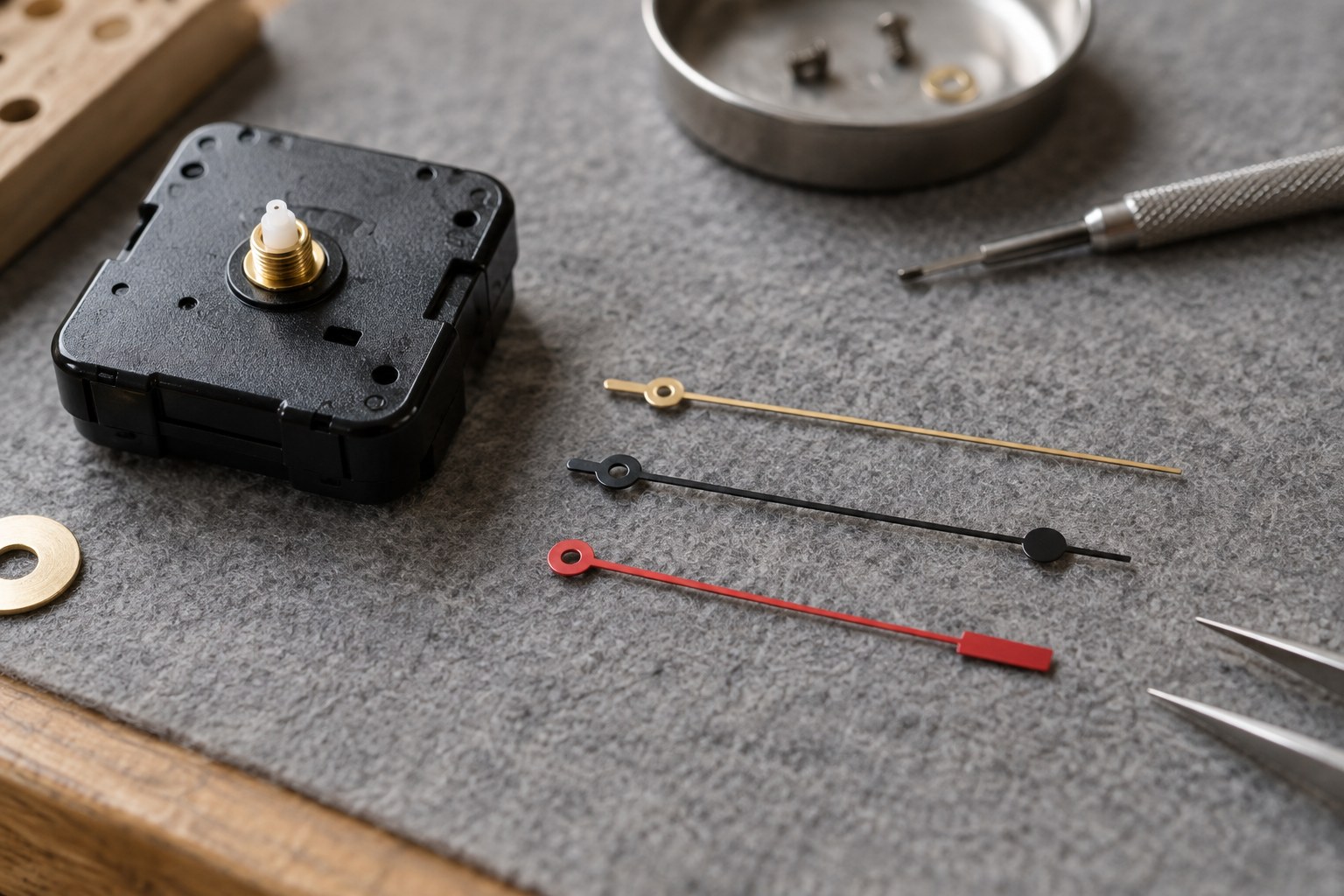
Choosing a second hand for a quartz project
A second hand adds motion, but it must be specified for the movement and have space to travel.
Read the notes ↗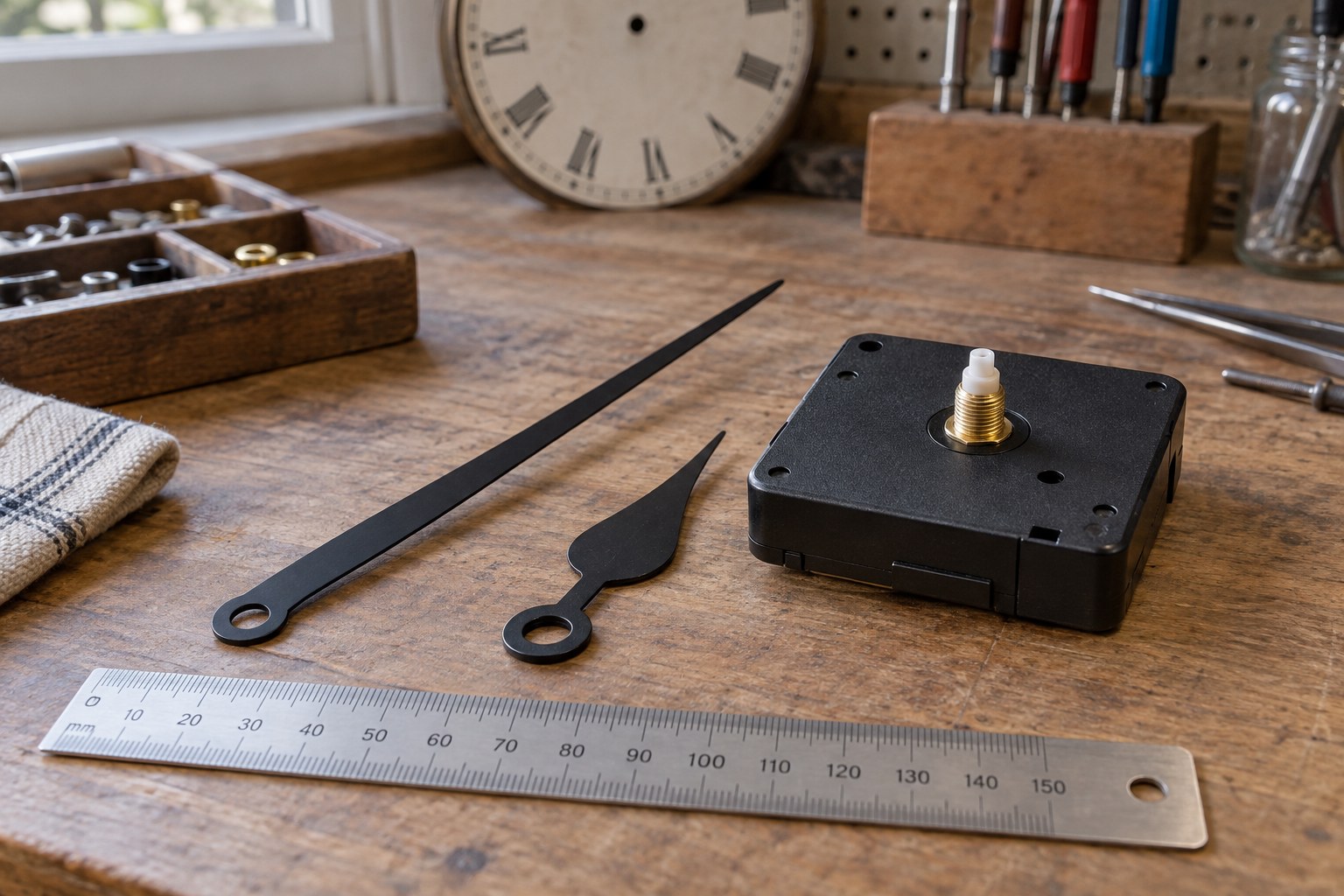
Why a large hand needs the right movement
Hand size and weight belong in the movement specification, not just the styling decision.
Read the notes ↗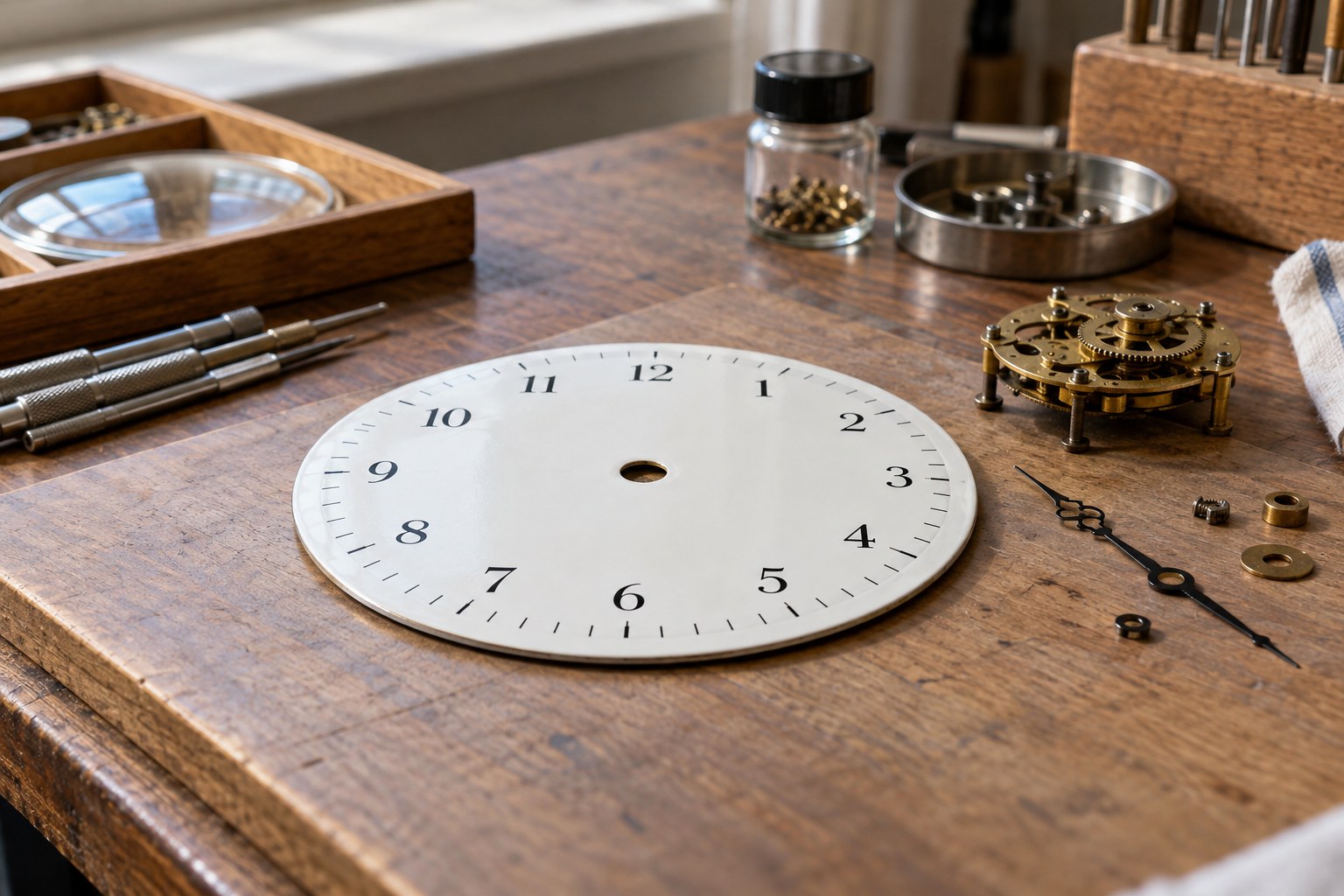
Keeping a clock dial flat during a project
A flat face helps preserve the clear space through which the hands move.
Read the notes ↗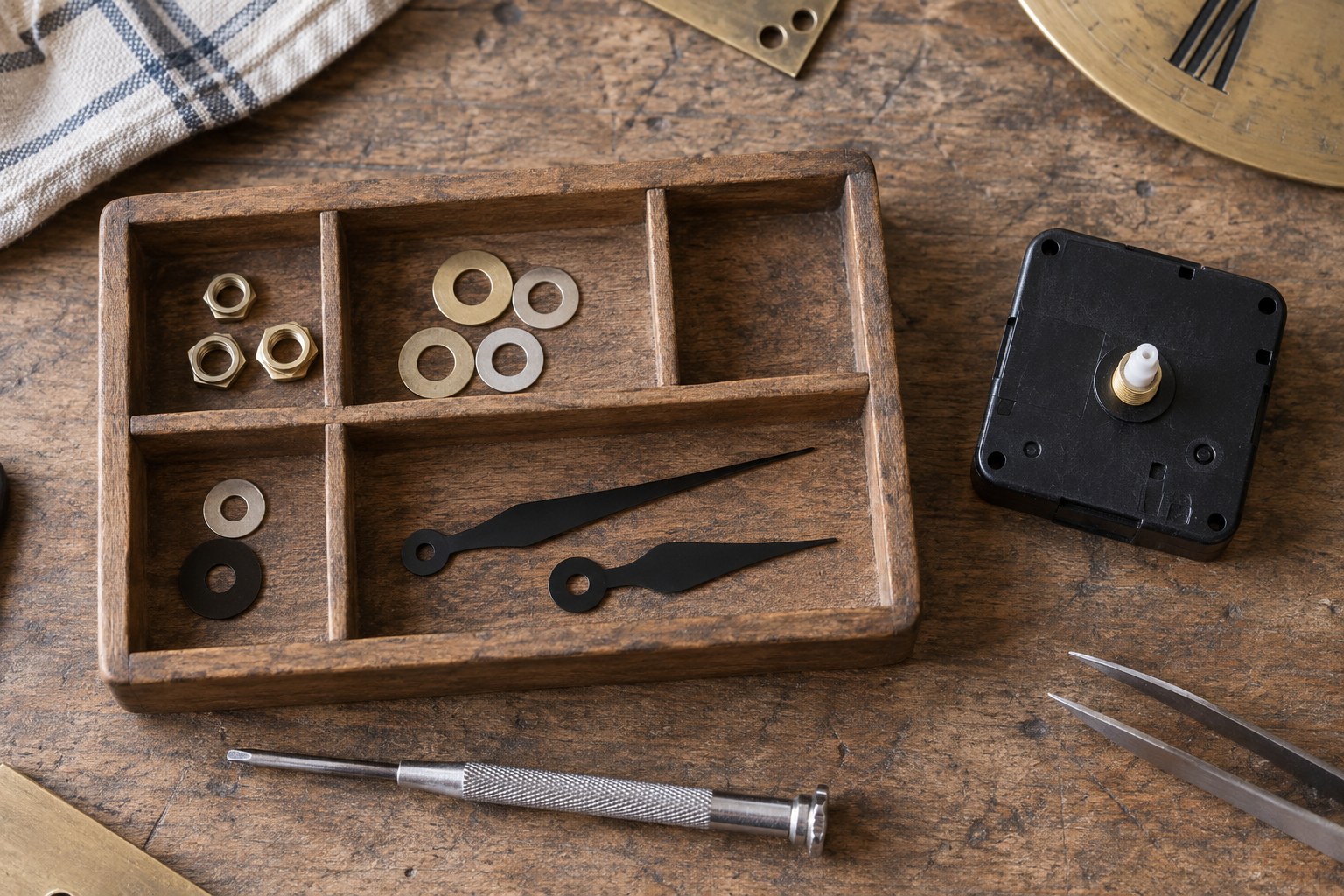
A parts tray makes small clock jobs easier
A shallow tray and a few labels can prevent a simple battery-clock job becoming a search for lost hardware.
Read the notes ↗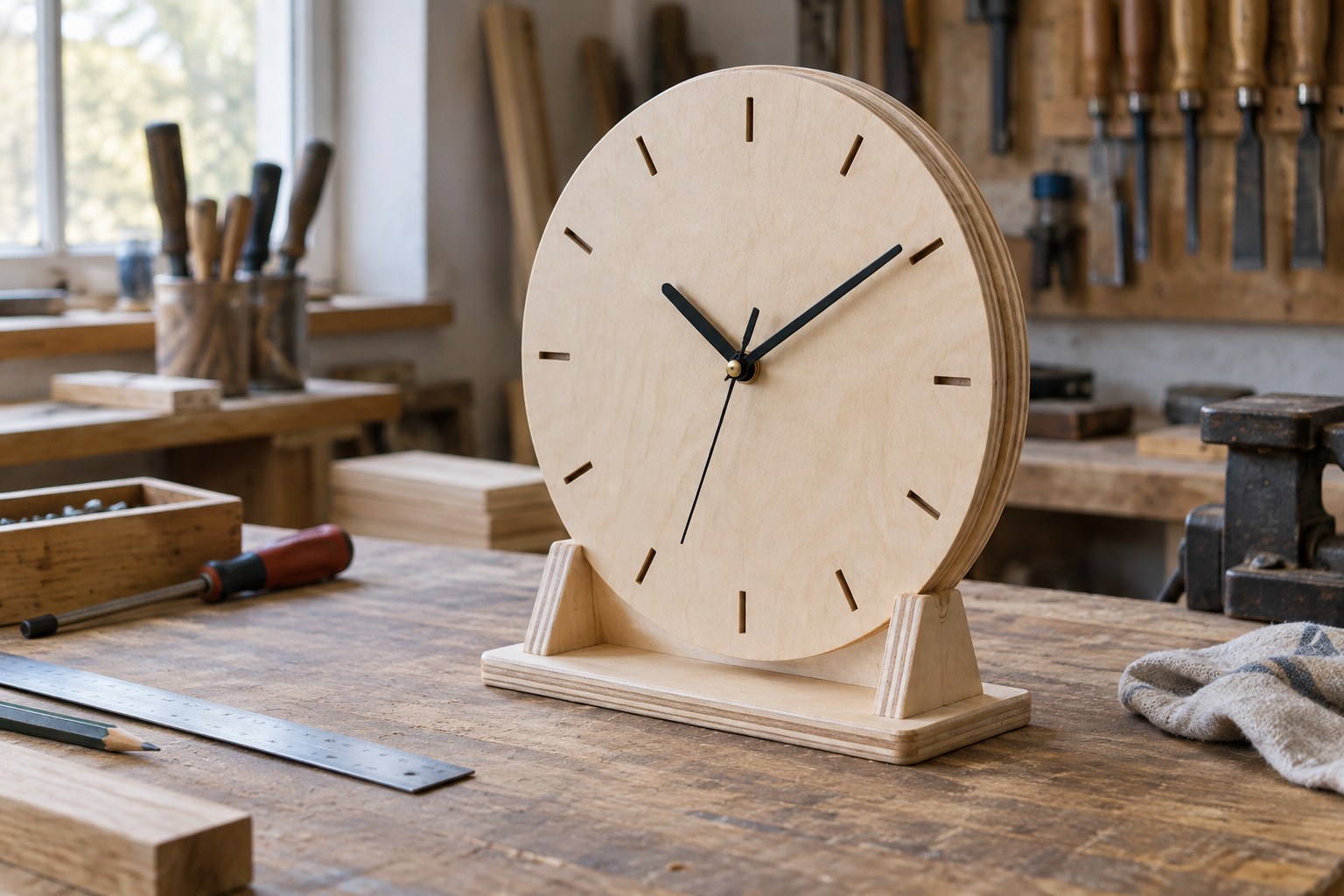
Testing a quartz build before hanging it
A bench test should check the finished assembly in the position in which it will be used.
Read the notes ↗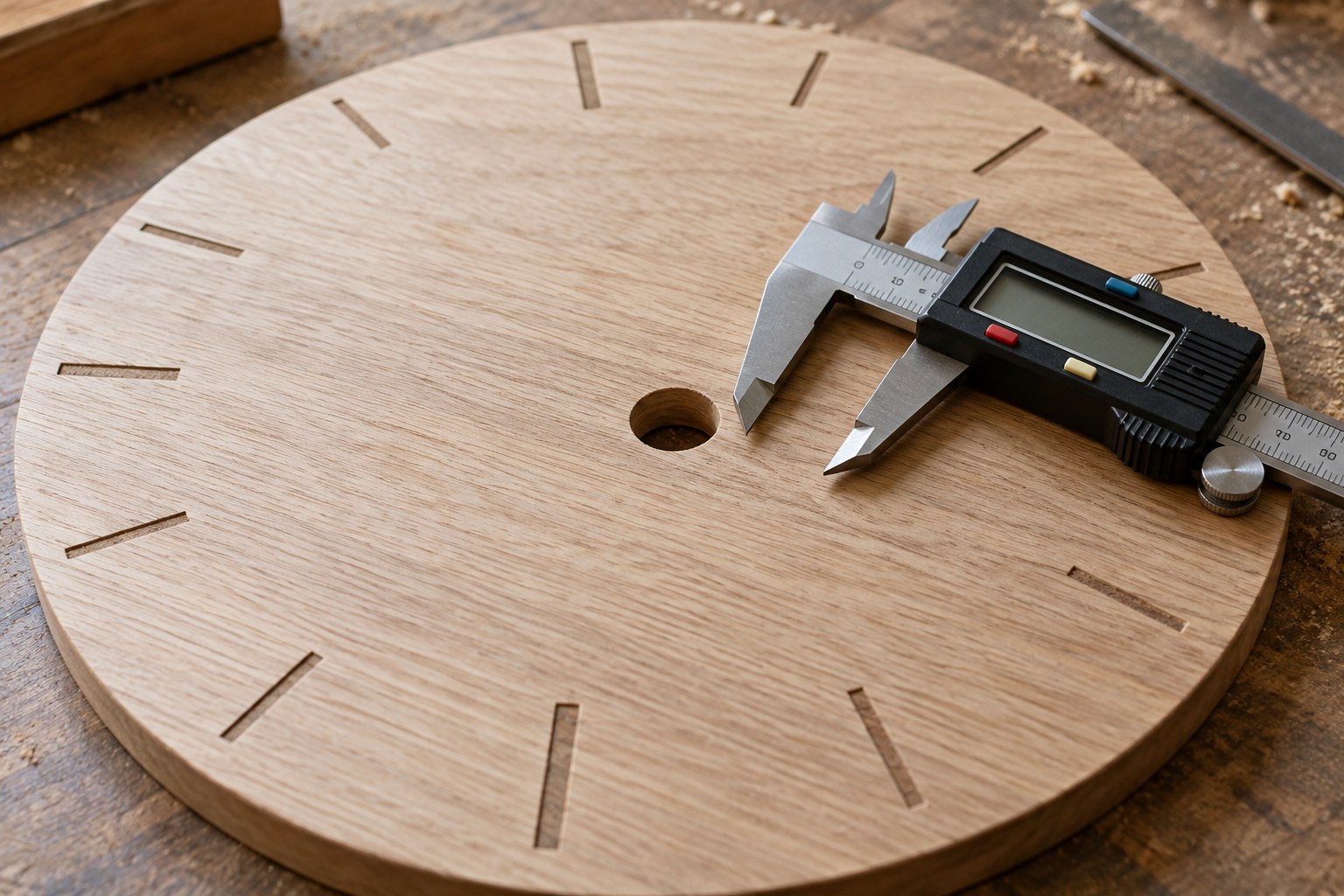
Checking the centre hole without enlarging it blindly
The centre opening should suit the specified assembly without weakening or damaging the dial.
Read the notes ↗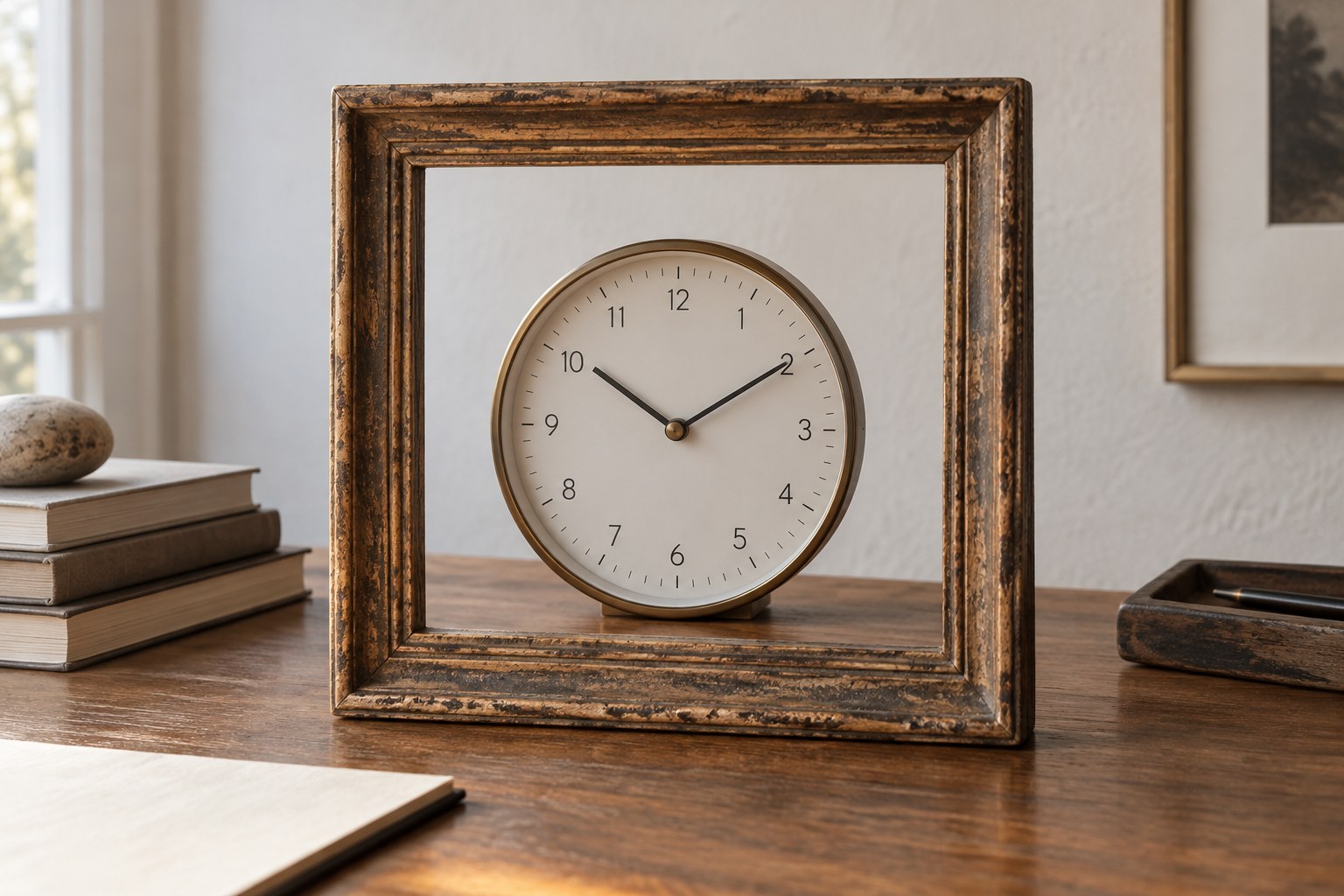
Reusing a frame as a clock surround
A picture frame can provide a useful surround if its depth, support and access suit the clock assembly.
Read the notes ↗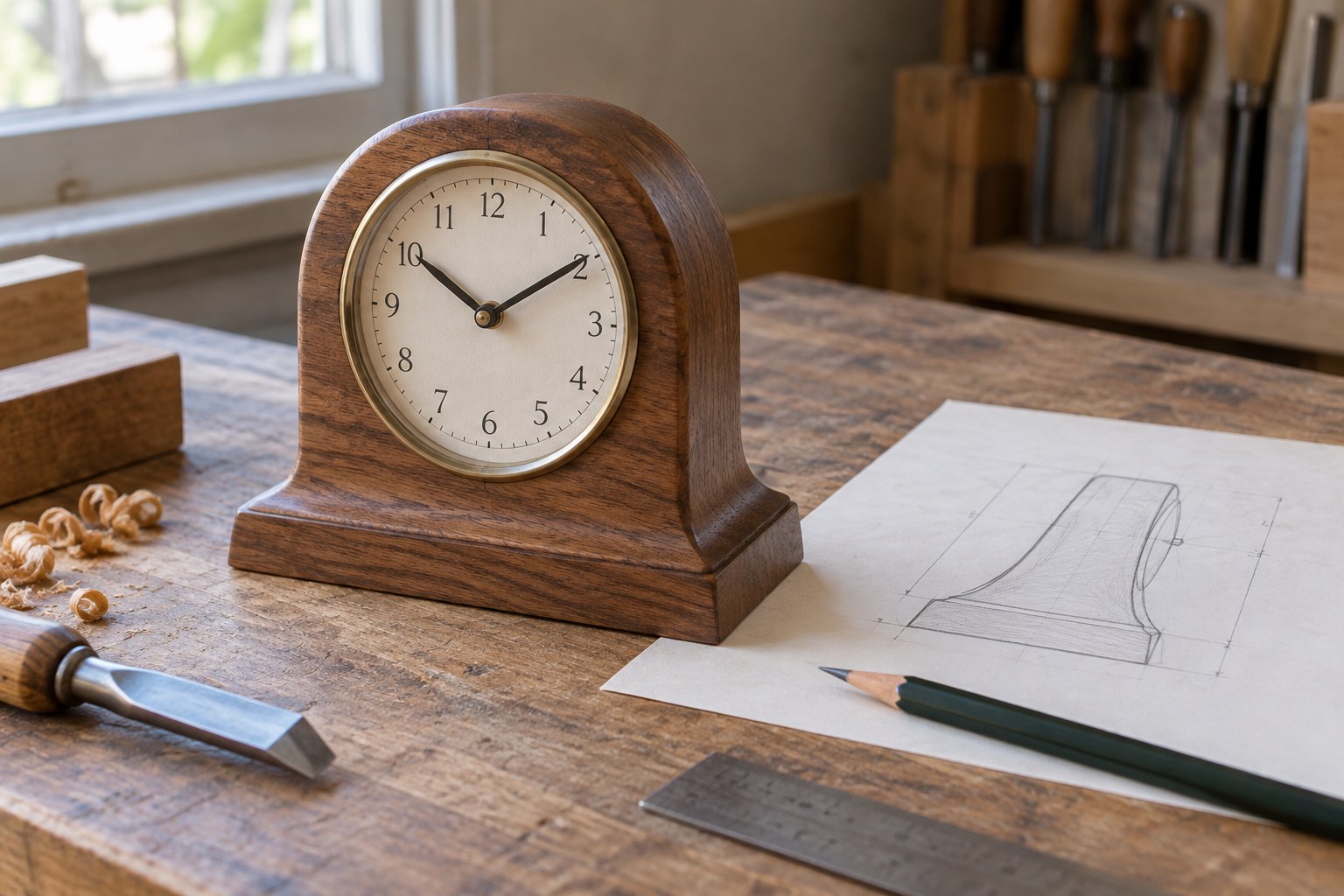
Planning a freestanding desk-clock project
A desk clock needs a stable base and readable angle as much as a well-designed face.
Read the notes ↗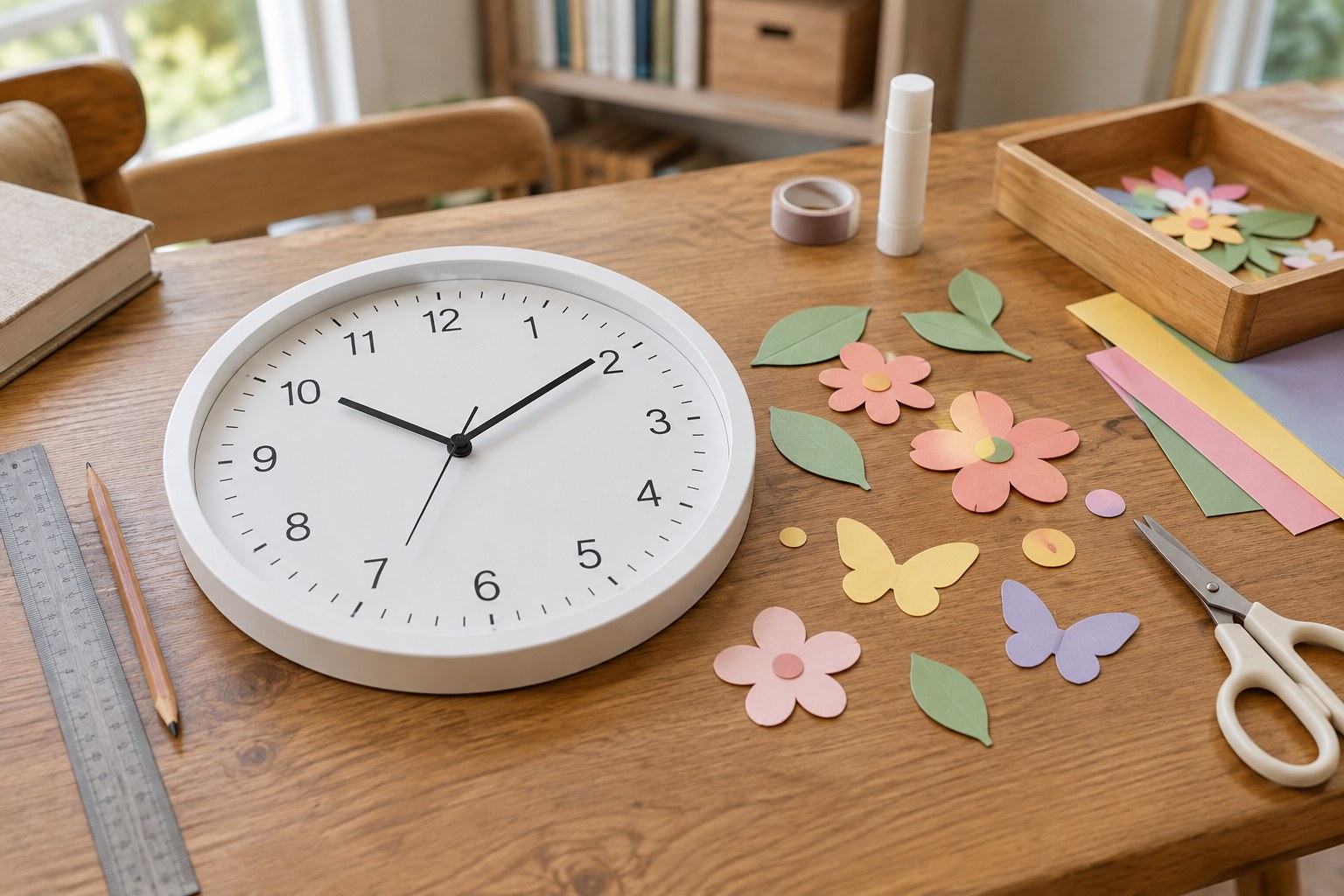
Making a reversible decorative clock update
Change the surroundings of a sound modern clock before altering its permanent surfaces.
Read the notes ↗